Drawing a Green Line in Maryland
 The state of Maryland has emerged as a leader in promoting high-performance buildings, especially public school construction. When Earth Day was celebrated on April 22, many in the school planning and management field were likely to be engaged in high-performance school construction. These designs lower the energy and greenhouse gas impact of buildings to levels inconceivable when this event was first held in 1970. Organizers of the first Earth Day wanted to curtail the obvious sources of pollution like smoke stacks, yet 41 percent of American energy use last year was to power commercial and residential buildings.
The 2008 Maryland HighPerformance Building Act is an early example of a type of mandate now in place in approximately half of states. It requires state and public school buildings projects to comply with the requirements of a minimum LEED (Leadership in Energy and Environmental Design) Silver rating. Substantial replacements of schools, where 80 percent or more of the building is being replaced, must also comply. The approach is increasing the inventory of high-performance school buildings in Maryland. As of January 2015, 42 completed school facilities in Maryland had achieved highperformance certification, another 21 are under construction and will seek certification, and 22 are in planning or design. If LEED had not been a statutory performance standard, it is likely that fewer school systems would have pursued high-performance design.
Since 1971, Maryland has participated in funding of renovation and construction of local school projects to ensure minimum design and performance standards are met statewide. Dr. David Lever, as the executive director of the Maryland Public School Construction Program, presently supervises this effort. During his tenure, he has seen a dramatic increase in high-performance building design. “Statutory authority was critical to raising the bar on high-performance design,” says Lever.
 Lever also participated in discussions to expand the state’s legal definition of a high-performance building to include buildings conforming to the Maryland International Green Construction Code, or IgCC. “We feel LEED certification and IgCC both push high-performance school buildings with the rigor we now expect in Maryland.” Lever also noted that when local jurisdictions adopt IgCC as part of their overall code compliance requirement, it will apply to more than schools, further increasing the statewide inventory of high-performance buildings.
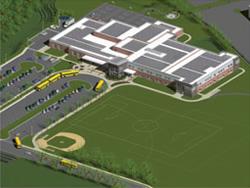
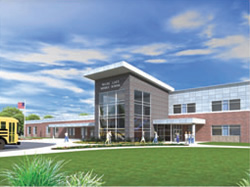
This 2008 act laid a gauntlet for even higher performance. Recently, the Maryland Energy Administration offered grants for “net-zero” school facilities that, over the course of a year, produce as much energy as they consume. The Howard County Public School System will break ground on the first school to meet this challenge — the Wilde Lake Middle School replacement project in Columbia, Md. The solar-powered building’s power consumption is planned at 24,900 – British Thermal Units per square foot (24.9 kBTU/sf) compared to the 51 kBTU/sf for a similar design built to minimum LEED certification. The existing building consumes over double the energy per square foot than the planned replacement. “The challenge to design a net-zero school will result in a ‘Gold’ certification from USGBC with the possibility of creating one of the first ‘Platinum’ schools in the state of Maryland,” comments Robyn Toth, AIA, LEED-AP and principal at TCA Architects. While net zero may not be an option for all projects, the technologies and procedures for operating the building at a low kBTU/sf are transferable to renovations of existing buildings.
The biggest challenge ahead is renovations since opportunities to replace old facilities are rare. Kim Schaefer, AIA, LEED-AP and principal of TerraLogos of Baltimore, Md. and LEED coordinator for a number of school renovation projects in Maryland, suggests “For LEED school renovations to be successful and cost effective you must start in the predesign process and inspire sustainable design.” She suggests opening the dialogue with these considerations:
- Evaluate the site and building orientation for solar access, sustainable storm water management, and outdoor learning;
- Improve building envelope performance with insulation, air sealing, daylight design and appropriate window selections;
- Optimize energy and water efficiencies through lighting and power design, right sizing HVAC systems.
High-performance design in new and renovated schools is effective leadership because it simultaneously benefits the bottom line on energy cost and places students in exceptional learning environments that may inspire them to build a greener future.
This article originally appeared in the issue of .
About the Author
Joel Gallihue, AICP is the manager of School Planning for the Howard County School System. He can be reached at 410/313-7184.