How Do We Determine Ideal Seat Height for Chairs?
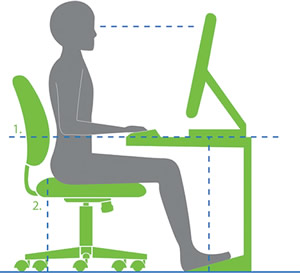 Proper seat height adjustment is a
critical component to optimizing workstation
ergonomics. Selecting the proper seat height
range for your chairs can prevent a number
of problems such as lower back pain, carpal
tunnel syndrome, etc. Follow these steps to
ensure you have selected the correct seat
height range for your chairs:
Proper seat height adjustment is a
critical component to optimizing workstation
ergonomics. Selecting the proper seat height
range for your chairs can prevent a number
of problems such as lower back pain, carpal
tunnel syndrome, etc. Follow these steps to
ensure you have selected the correct seat
height range for your chairs:
Step One: Measure the height from the floor
to the top of your work surface.
Step Two: Calculate the optimal seat height
range by subtracting 10 inches from the worksurface
height. This calculation should be the
mid-point of the chair’s seat height range. Your
seat height range should adjust at least 2.5 inches
above and 2.5 inches below this mid-point.
Having the correct seat height range will
enable you to fine-tune the level at which you
work throughout the day to ensure maximum
ergonomic comfort.
Call 262/798-9200 or email BEVCO at [email protected] to select the right chair for your specific needs.
This article originally appeared in the issue of .