Energy Efficiency Made Easy
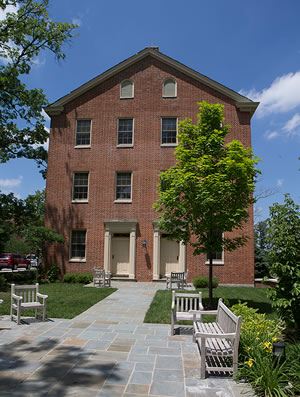
Miami University maintained the architectural integrity of their
historic residence halls and also realized great energy savings, with
help from Mitsubishi Electric VRF systems.
In 1825, Miami University
(Oxford, OH) built the three-story
Elliott Hall men’s residence and its
mirror image, Stoddard Hall, nine years
later. In 1972, both halls were placed on the
National Register of Historic Places.
In 2010, Miami University (Miami) tasked
its physical facilities department with developing
a utility master plan to grow its campus
and shrink energy costs. Miami made geothermal
cooling and heating a centerpiece of
its sustainability strategy and committed to
ending on-campus coal burning by 2025.
With Miami’s sustainability goals and
the unique cooling and heating requirements
of the two older buildings, they
immediately thought of Variable Refrigerant
Flow (VRF) systems from Mitsubishi
Electric Cooling & Heating (Mitsubishi
Electric). The team was impressed by the
level of engineering design, but was really
sold by the simultaneous cooling and
heating capability. Energy modeling also
showed a total building energy usage of
43 kBTU/h per square foot per year.
Seventeen 600-foot-deep geothermal
wells were placed under the surrounding
sidewalks. With no modern footings
150 years ago, there was no space for the
Mitsubishi Electric water-source heat
pumps. Easy-to-access mechanical rooms
were built into each hall’s attic for three heat
pumps and associated controls hardware.
To maintain the building’s architectural
integrity, custom cabinets were designed
and built to house the indoor units. These
cabinets were only possible because of the
two-pipe system design.
Metered as one, the two halls showed 2010-2011 annual energy usage of 740,000 kBTU/h.
Following the Mitsubishi Electric installation,
this number dropped to 346,000 kBTU/h —
a 61 percent decrease in energy consumption
compared to 2010. The oldest buildings on
campus are now the most energy efficient.
Miami is so impressed with Mitsubishi
Electric systems that they are now their
system of choice for all new outlying buildings
not tied into the central plant.
www.mitsubishipro.com
This article originally appeared in the issue of .