Connecting the Community
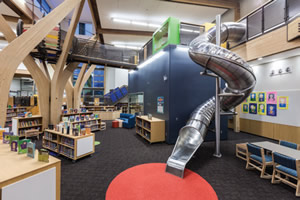
Tandus Centiva Powerbond is one colorful element of Trillium Creek Primary School that makes it an inviting and engaging place for children to learn.
Trillium Creek Primary School in West Linn, Ore. is the kind of place you just want to be. It includes lots of open spaces to invite collaboration and a library that looks like a forest. Splashes of bright colors adorn the floors and walls. Natural finishes bring the outdoors in. And a giant slide connects students from the second to the first floor because, why not?
The school redesign represents the successful culmination of an inclusive planning process with the district and community — an expansive approach that invited everyone in to reimagine the learning environment, especially the students themselves. In fact, one fifth-grader’s quote became a sort of mantra for the whole school’s design: “I want to be the captain of my own learning.”
Underneath it all, Tandus Centiva Powerbond is there, grounding the design with a wonderfully durable soft surface that can seamlessly integrate bright color inlays while transforming even the floorplane into a place where kids` can hang out and learn. And it helped achieve a primary objective: A sustainably designed environment that models responsible stewardship of resources. Because Tandus Centiva Powerbond performs so well for so long; because it stays looking good for 20, 30, even 40 years (and beyond); and because when it finally does need to be replaced, it’s easily recycled.
Trillium Creek won the National 2014 James D. MacConnell Award, which recognizes excellence in comprehensive planning in educational design. But even more importantly, the school’s a winner with the students, teachers and whole community. As one student put it, “The fun things kind of inspire you and the cool things make us want to come to school.”
www.tandus-centiva.com
This article originally appeared in the issue of .