New School Promotes Experiential Learning
San Diego, Ca. — The Launch Pointe at Monarch School, serving kindergarten through 12th grade, will engage students in hands-on, project-based learning. The Launch Pointe is a space where students can engage with employers, have industry partners lecture or teach a course and build an identity as a community space.
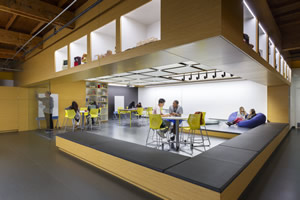 Preparing students for life after Monarch includes innovative exploration, critical thinking, problem solving, hands-on learning experiences and team collaboration. The space will support these concepts with three academies: information technology, building and construction and social services.
To encourage student ownership and pride, design features that support student personalization such as choice of lighting, a variety in levels that create zoning and interactive technologies have been incorporated into the design. Flexible furniture will support an agile and reconfigurable learning space. As students gain confidence and understand their own individual learning preferences, they will have opportunities to work in teaming and collaboration spaces to support student-centered education.
Architecture, structural engineering, MEP engineering and interior design for the project is being handled by LPA Architects. As one of the largest integrated design firms in California and Texas, LPA provides architecture, planning, landscape architecture, interior design, engineering, and graphic/signage services from early program development to project closeout.