University Saves Money on Quality Projectors
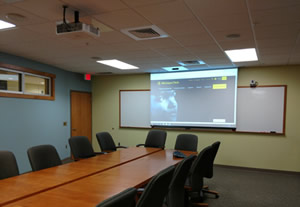
Hitachi’s OneVision Program helped Michigan Technological University get incentives and specialized pricing when it came time to buy new projection equipment.
Michigan Technological University is a public research university and home to more than 7,000 undergraduate and graduate students. Courses at Michigan Tech include science and technology, engineering, forestry, business and economics, mathematics, health professions, and more. On campus, there are more than 100 classrooms, conference rooms, and distance learning centers all complete with multimedia setups. When it comes to fitting these spaces with the proper AV equipment, Paul Raymond, senior media systems engineer at Michigan Tech, turns to Hitachi and its OneVision program.
“We have different AV setups in our classrooms depending on the size and what the classrooms are used for,” says Raymond. “Most of the classrooms are set up with a Crestron control system, computer, laptop support, document camera, Panopto lecture capture and projector. We started primarily using Hitachi when the collegiate series came out. We have used projectors from other manufacturers, but Hitachi is the only one we found to be consistent. We have standardized on the Hitachi collegiate series of projectors. Currently, a lot of our classrooms are fitted with the CP-WU5505.
The Hitachi OneVision program for higher education facilities provides educators with specialized pricing, enhanced service, direct access to Hitachi experts and program rewards. These rewards include offers to buy 10 projectors and get one projector free, or buy three projectors and get one lamp free.
“The primary perk of the OneVision program that we have taken advantage of is the buy 10 projectors get one free,” says Raymond. “We’ve received three free projectors from the program already and expect to receive a fourth soon. We also appreciate the advantage of the program’s exclusive offers. We’re excited to advance our classroom technology forward with the laser projectors.”
www.hitachi-america.us
This article originally appeared in the College Planning & Management January 2018 issue of Spaces4Learning.