Rainwater Harvesting Made Easy
- By Jessica Molter
- 01/01/18
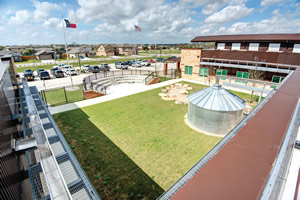
Saving water. Pfluger designed a gray water system at Howard Norman Elementary School with the goal to conserve resources and educate students and the community about sustainable practices. A corrugated galvalume cistern was used to collect rain and condensate from roof top equipment for irrigation. After 16 months of usage, the landscape is thriving, the maintenance staff are happy, and less potable water is being used for irrigation.
Incorporating a rainwater harvesting system on your campus for irrigation is, conceptually, simple. However, a well-intentioned concept can easily turn into a complex and expensive system that is difficult and expensive to maintain. An easy solution to incorporate rainwater harvesting is to limit the scope. Here are some simple strategies for designing an effective and affordable system:
- Select a cistern from a local supplier’s stock sizes and configurations that will adequately irrigate the targeted area using condensate alone. This would eliminate the need for a supplemental potable water source, which requires backflow prevention and a control system to switch between the two water sources.
- Engage your structural engineer to design the cistern foundation and any aqua-duct support.
- Let gravity do the work by keeping the top of the cistern below the gutter. By relying on existing downspouts and gutters, the need for water-proof supply pipes is eliminated.
- To minimize evaporation loss, pipe condensate from the mechanical units to the gutter using stainless steel or coated metal piping to avoid corrosion over time.
- Use removable screen filters at the cistern inlet to catch large debris, allowing a negligible amount of smaller particulate to settle to the bottom. To compensate, the outlet pipe should be installed several inches above the cistern floor. This option eliminates the expense and maintenance of a complex, active filtering system and would only require draining and cleaning the cistern every 10-15 years.
- Design for maintenance. Install an access hatch and a valve near the base of the cistern and make sure there is a drain inlet nearby, so the system can be drained for maintenance.
To maximize the effectiveness of the irrigation system:
- Utilize a zonal, low-pressure drip irrigation system for planting beds and turf. This type of open/close valve system only requires low voltage, irrigation controls—limiting trades involved.
- Select native and drought tolerant plants and incorporate large shade trees to protect other plantings from the sun.
Once the system is operational, let the campus see its effectiveness by adding visible gauges controlled with floats in the cistern. By keeping these solutions simple, they will be a welcomed addition to any campus!
This article originally appeared in the School Planning & Management January 2018 issue of Spaces4Learning.
About the Author
Jessica Molter, RA, LEED-AP BD+C, is a principal with Pfluger Architects, which has offices in Austin, Houston and San Antonio, Texas.