Plans Announced for New Massachusetts High School

Plans were recently unveiled for the new Belmont High School in Belmont, Mass. Perkins+Will, the project designer for the new facility, had been meeting with the Belmont High School Building Committee to help streamline the new building design that will be home to 2,215 students in grades seven-12.

The new schematic plans for the school will help reduce the total cost of the project and slightly reduce the overall square footage, while still maintaining the maximum amount of space for learning and collaboration among students.
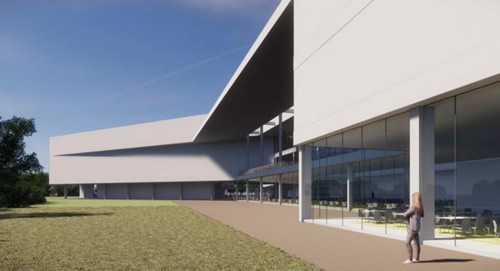
Belmont High School

Featured

  • Growing Allied Health Workforce Demands Fueling Greater Need for Higher Education Facilities

    With the demand for healthcare professionals at an all-time high, colleges and universities are challenged with supporting the workforce demands in their own communities. Careers in allied health generally require specific training and/or certification, with some positions requiring degrees, certified credentials, and continuing education.

  • Hawaii Elementary School Reopens Following $25M Campus Modernization

    Haʻaheo Elementary School in Hilo, Hawaii, has reopened to students following a three-year, $25-million campus modernization and expansion project that significantly increases the school's instructional space while preserving one of the island's oldest educational institutions, according to local news.

  • Minnesota District Opens New PreK–12 School

    Gibbon-Fairfax-Winthrop Schools in Gibbon, Minn., recently announced that construction is complete on a new, $68.9-million school for students in grades PreK–12, according to a news release.

  • Wold Completes Geothermal Projects at Two Minnesota Schools

    Wold Architects & Engineers recently announced that it has completed two geothermal expansion projects for Mounds View Public Schools in Shoreview, Minn., according to a news release. The work at Highview Middle School and Irondale High School serves the district’s long-term goal of reducing energy costs and dependency on non-renewable fuel sources, as well as improving building performance.