Renovation Underway at Florida High School
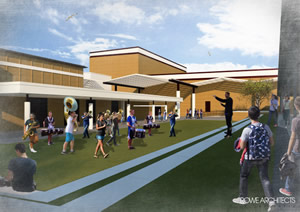
Tarpon Springs High SchoolRenovation is underway at Tarpon Springs High School in Tampa, Fla. The $13.8-million dollar project includes construction of a new building for the music program, demolition of old buildings, and building improvements throughout the campus.

New flooring and carpet will be two of the updated elements in the school, along with improved acoustics and plumbing systems for the buildings. New courtyards and outdoor classroom spaces will be created through the process as well. JE Dunn Construction is handling the construction management duties for the project, which is expected to wrap up in July of 2019.

Featured

  • Spaces4Learning Announces 2026 Product Award Winners

    Spaces4Learning has just announced the winners of the 2026 Product Awards! The award program spotlights outstanding product development achievements of manufacturers and suppliers whose products or services are considered to be particularly noteworthy in their ability to enhance K–12 and higher-education learning environments.

  • Doerr School of Sustainability Accelerator

    From Concrete Warehouse to Innovation Hub: Accelerating Sustainability at Stanford

    The transformation of a once windowless, concrete publishing warehouse into a sun-drenched center for global innovation began with a single, fundamental challenge: how to turn an industrial storage shell into a space built for human connection.

  • Philadelphia Middle School Facility Earns LEED Gold Certification

    The Alternative Middle Years (AMY) at James Martin Middle School in Philadelphia, Penn., recently received a LEED Gold certification from the U.S. Green Building Council, according to a news release. The School District of Pennsylvania partnered with KSS Architects on the project.

  • Planning with Clarity: Using AI to Make Better Campus Decisions, Not Just Better Designs

    Higher education leaders are being asked to make increasingly high-stakes decisions about campus facilities amid greater uncertainty than ever before. Social and economic pressures, shifting enrollment, and evolving learning models compete with growing deferred maintenance needs to strain even the most robust infrastructure budgets.