Vacuum Innovation Contributes to Improved School Attendance and Test Scores
 According to a 2014 survey by the National Center for Education Statistics, nearly one-half of the nation's schools had poor indoor air quality that can contribute to high levels of absenteeism associated with asthma and other health problems. However, rigorous cleaning using modern equipment can reduce exposure to allergy and asthma triggers in primary and secondary education and college settings.
The U.S. Environmental Protection Agency (EPA) recommends using vacuums with high-efficiency particulate air (HEPA) filters to effectively capture dirt, dust and germs. They can help remove allergens from carpets and extend the life of the floor as well as offer the versatility needed to remove dust and dirt that collects around vents and other above-the-floor surfaces.
The Carpet and Rug Institute (CRI) has a Green Label program for the highest-performing vacuums. Machines that achieve the CRI's Seal of Approval offer a good benchmark for product selection.
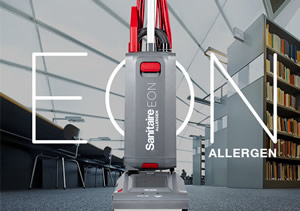
Some Sanitaire vacuum models, like the Sanitaire® EON™ QuietClean® upright, Sanitaire® EON™ ALLERGEN upright and Sanitaire® TRANSPORT™ QuietClean® backpack, have earned the CRI's highest rating, the Gold Seal of Approval, due to their soil removal capabilities, filtration and quiet operation. In addition, the EON™ ALLERGEN is the first commercial vacuum certified asthma & allergy friendly® by the Asthma and Allergy Foundation of America. This machine, rigorously tested and scientifically proven to help reduce exposure to allergens and irritants, allows you to create an exceptionally clean learning environment.
The EPA also recommends the use of CRI-certified carpet extractors to remove stains and residues from carpets. However, it is important to use carpet dryers or fans after extracting or shampooing school carpets to prevent the added moisture from producing mold or leaving musty odors that could trigger asthma.
Numerous studies analyzed by third-party research commissioned by the CRI found that carpet actually offers better indoor environmental quality safeguards than hard-surface flooring, because carpet retains dust and allergens that would easily become airborne from tile, wood or other hard surfaces.
Studies also found that vacuuming on both carpeted and hard surface school floors should be more frequent, with slower and repeated passes. Commercial backpack and canister vacuums can utilize a hard-surface tool (often included at purchase). Choose an upright vacuum that allows the brushroll to be turned off when on hard surfaces and choose vacuuming over sweeping and mopping when possible. "Brooms and mops push dirt and allergens across the floor and into the air, whereas vacuuming removes them," says Dalvin Green, product manager for Sanitaire.
The focus on cleaning and other wellness initiatives can pay off significantly for schools, their students and teachers. The EPA cited Washington Green Schools, a voluntary program implemented in Washington state to improve school cleanliness and wellness. Participating schools reported a 15 percent reduction in absenteeism and a five percent increase in student test scores.
Sponsored by: Sanitaire