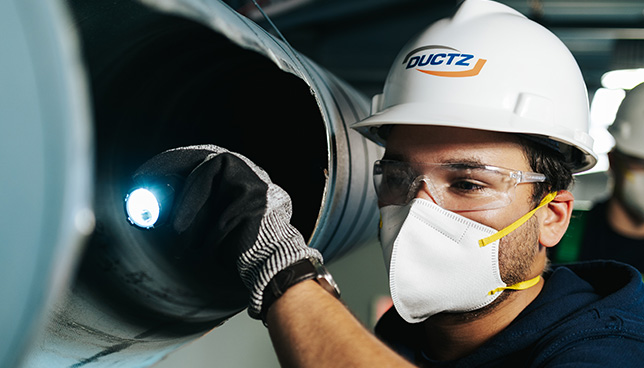
While many schools are out for the summer, year-round schools follow a more “balanced” schedule with shorter, more frequent breaks spaced throughout the school year. Even though this offers educational benefits, these facilities have less downtime for building maintenance. This can become an issue when facilities managers overlook the importance of routine HVAC maintenance and air duct cleaning services.
Greenheck recently released a new energy recovery ventilator, the ERVi, designed for small indoor spaces like basements and mechanical rooms, according to a news release. The hardware can fit through a 30-inch door and be mounted on the ceiling for retrofit and decarbonization projects.
Clean air in schools is not only essential for addressing respiratory concerns but also has broader benefits for overall health and learning. The American Lung Association emphasizes that healthier indoor air can benefit both students and staff. A clean and well-ventilated environment supports cognitive function, concentration and the general well-being of everyone in the school community.
IAQ monitoring systems solutions provider Attune and the Illinois Chapter of ASHRAE recently partnered to provide new equipment to two K–12 public schools in Western Springs, Ill. Forest Hills Elementary School and McClure Junior High received Attune IAQ monitoring systems as part of an ASHRAE sustainability research project that began in February 2024.
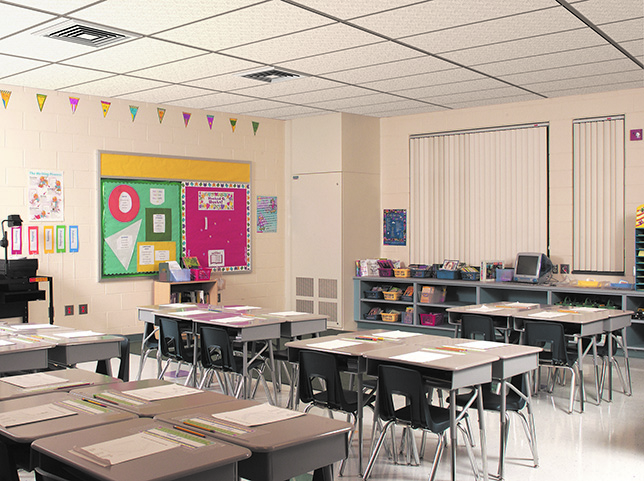
Spring is a wonderful time of year. The days are longer, the weather begins to warm up, and everything is in bloom. However, for many people, this also means seasonal allergies will set in. The Centers for Disease Control and Prevention estimates that approximately 25% of adults and about 20% of children will suffer from seasonal allergies.
McMaster University is using technology to better control and manage its legacy thermal systems and create smarter buildings. Carmichael Engineering Ltd., a Canadian systems integrator, worked closely with ABB Canada’s leading experts and its highly adaptable smart building platform, ABB Cylon®, to improve energy efficiency, enhance user adaptability, and leverage innovative technologies in locations across campus.
Clean air isn’t a luxury – it’s a necessity. By leveraging cutting-edge technologies, schools can protect their students and staff at an affordable price. With so many entry points for threats to student and staff well-being, a single solution can’t cover every hole. Adopting a layered approach that utilizes multiple technologies allows schools to address the broad range of potential entries for pollutants. Here are a few key components of a multidimensional solution to ensure the highest air quality for your school.
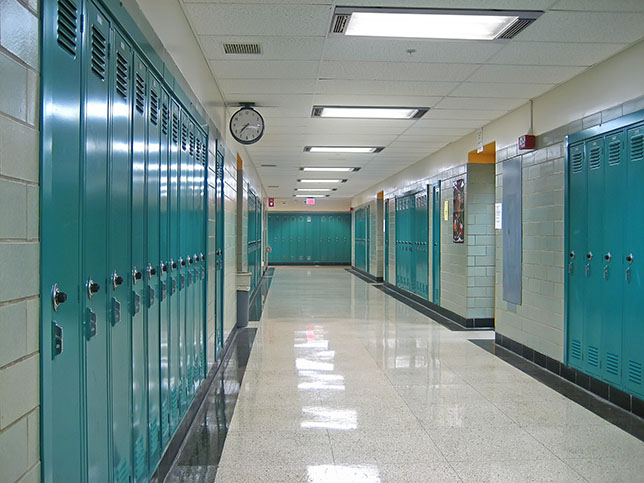
HVAC indoor air quality company Modine has debuted the VidaShield UV24 Active Air Disinfection System for the K–12 school market. The product line combines UV-C light irradiation with air circulating fans and an optional ceiling light, the company said.
HVAC and air-cleaning systems performance testing solutions provider SafeTraces recently announced that the Clark County School District (CCSD) in Nevada has become the first public school district in the U.S. to achieve the UL Verified Ventilation & Filtration (VVF) annual verification mark in its portfolio of facilities, according to a news release.
There is a growing level of both interest and requirements to improving Indoor Air Quality (IAQ) through improved ventilation, temperature and humidity control, and filtration to improve the health of students and teachers in K–12 schools. Aging equipment often is not designed to meet these requirements, prompting replacement. But this replacement comes with an added benefit—that being significantly improved efficiency.

Acoustics isn't only about creating quite classrooms. It's a critical part of the overall IEQ of a school—from classrooms to nurses' offices to administration spaces. New and better technologies exist to give schools solutions that achieve what is needed in today's world while keeping budget parameters in mind. These acoustical solutions start at the top with ceilings, and not all ceilings are alike. Join us as Sean Browne, Senior Manager of Research & Development for Armstrong World Industries, walks us through choosing the right ceiling to optimize acoustics for better learning experiences.
Today’s K–12 leaders are tasked with everything from adhering to rigorous academic standards to implementing operational procedures to building healthy school communities, and for many, sustainability unintentionally falls to the bottom of the priority list. Further, the cost of taking on green initiatives is on the rise, making it even more of a challenge for financially strapped school districts to meet sustainability expectations and commitments.
Extreme heat is becoming more and more of a problem during the early and late weeks of the school year. To prevent hot temperatures and poor air quality from being an issue for K–12 facilities, it’s important for school leaders to be proactive in their preparation.
With the start of a new school year, the health & wellness of students, teachers, and school district employees has become—more than ever—a top priority and concern.
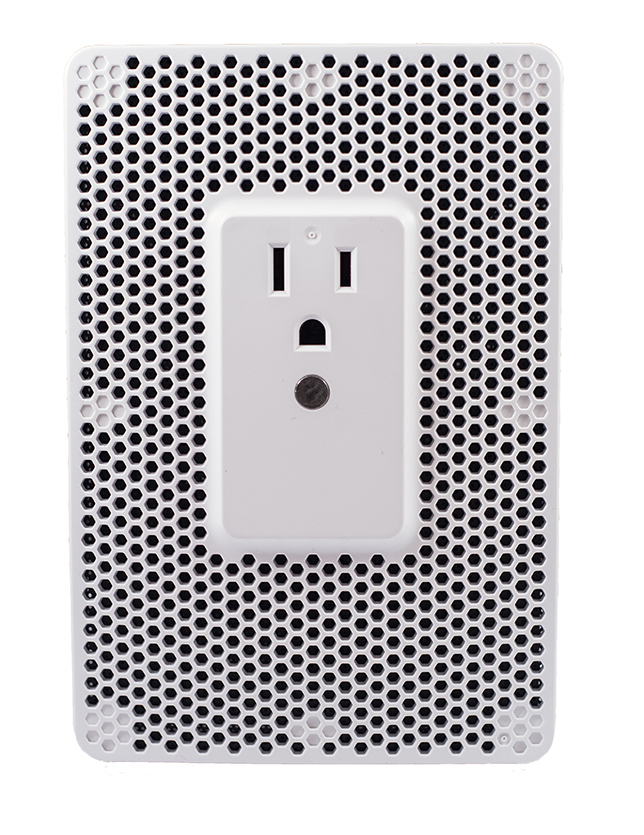
Sensor solutions company FreshAir recently announced the launch of the FreshAir1 Smoking Detection System, according to a news release. The technology monitors for and detects tobacco and marijuana smoke, and it is geared toward use in school and university buildings.
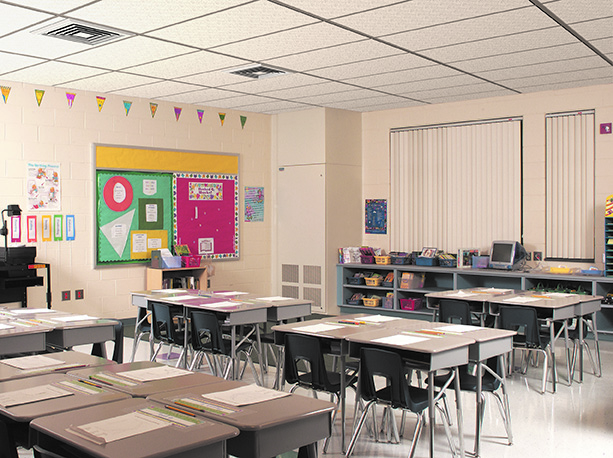
In the pre-pandemic world, IAQ was often recognized as a best practice for K–12 facilities. While its importance was never in question, there wasn’t much of an emphasis on the vital role it plays in our children’s lives and development. It didn’t make the evening news or create the buzz it does now. The COVID-19 pandemic put a spotlight on the necessity of having clean, comfortable air.
Facility solutions provider ABM recently announced that it has initiated an Energy Performance Contracting Program with the Abbeville County School District (ACSD) in South Carolina. A news release reports that the solution will modernize facility infrastructure in all the district’s schools and save the district about $4.9 million in energy and operating costs over the next 15 years.
Air monitoring systems provider Poppy Health recently released the results of a pilot study that it conducted alongside Primary.Health to test indoor air at California K–12 schools, according to a news release.
In this episode of Schools in Focus, we’ll be talking about indoor air quality in schools. Our guests are Mike Wolf, Director of Regulatory Business Development, and Tyler Mancl, Principal Application Engineer, both with Greenheck.
HVAC industry solutions provider Modine Manufacturing Company recently announced a new resource to help K–12 facilities managers monitor their school’s IAQ (indoor air quality) needs.
Chancery High School in Orlando, Fla., recently installed a new clean air solution from pathogen control technology company UV Angel. According to a news release, the school installed 59 UV Angel Clean Air units.
Indoor air quality technology is complicated, mostly because you can't see it. There remains a lot of confusion about expectations of these devices and what they truly are (and aren’t) capable of. Here’s what you want to consider before installing these devices in your facility.
A history of deferred maintenance could take the wind out of improved ventilation strategies.
This episode's topic is "Improving Building Health, Safety and Security with Smart Sensor Technology," and our guest is Mike Davis, National Sales Manager for IPVideo. We'll talk about the different types of sensors and the variety of data they can collect, from physical to chemical to environmental to security. This episode is sponsored by IPVideo.
The White House launched a new program Thursday, calling on schools, colleges and universities to work to improve indoor air quality. In conjunction with the launch, the Environmental Protection Agency also released new guidelines for best practices for improving indoor air quality and reducing the spread of COVID-19 further.
Disinfection techniques that help make classrooms safe for students, teachers and staff are still top of mind. Here to discuss some of the benefits of ultraviolet light disinfection are Bruce Ramsay, Brand Manager for Visioneering, and Tim Stevens, Director of Product Management for Certolux. We’ll touch on some facts and myths about UV light, the role of UV light in maintaining clean education spaces, the challenges that education professionals should be aware of when purchasing UV light technology, and the technology’s benefits for end users in educational facilities. This episode of Schools in Focus is sponsored by Viscor, a Leviton company.
The North Bend School District in North Bend, Ore., recently announced that it has chosen Alen as its provider of indoor air quality solutions.
The Meriwether County School District in Greenville, Ga., announced this week that its school board has voted to install disinfection devices on buses.

COVID-19 and many other viruses are thought to spread mainly from person to person through respiratory droplets and aerosols in the air. Studies suggest that emissions from people can span a room and be pulled into air circulation systems in just a few seconds. A strong air-monitoring and air-management strategy can make the difference between a healthy environment and one in which disease easily spreads.
It is a well-known fact that the environment affects human performance, both physically and mentally. This is especially true for students, who are impacted by the quality of air in their learning environment.