Florida Southern College Breaks Ground on New School of Physical Therapy
Florida Southern College (FSC) in Lakeland, FL, recently broke ground on its new School of Physical Therapy, a stunningly designed facility that will supply highly trained physical therapists to healthcare facilities in central Florida and beyond. The new Schoolwill be strategically located on South Florida Avenue in Lakeland, less than a mile from FSC’s main campus.
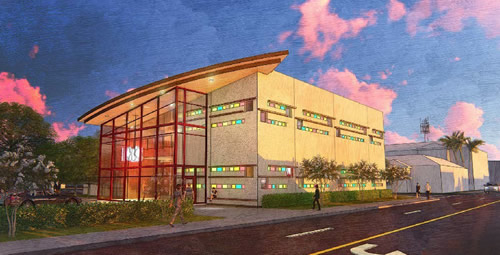
Renovation and construction work is underway on an existing 6,500-square-foot building, with an 11,000-square-foot addition to come. The structure will be a great addition to the Dixieland corridor, a historic district in Lakeland. Scheduled to open in August 2019, the building will include faculty offices, classrooms, and a state-of-the-art lab.
The architect on the project is Wallis Murphey Boyington Architects, with construction work to be completed by Rodda Construction. Mike Murphey, WMB partner with ROI Solutions, said the building’s design is inspired by the work of architect Frank Lloyd Wright, notably including elements reminiscent of the colored-glass “textile blocks” Wright incorporated into his designs for the Florida Southern campus.