Texas Woman’s University Breaks Ground on Science and Research Center

Texas Woman's University (TWU) in Denton, TX, broke ground this month on a new science and research center that will add critical research space and enhance efforts to increase research activities at the institution.
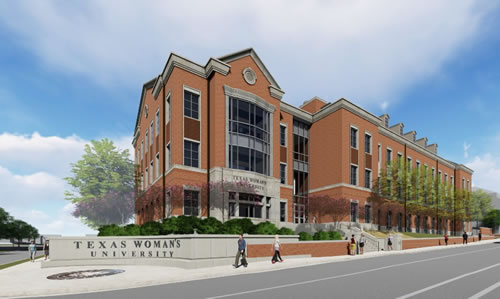
Texas Womans University Science and Research Center

The four-story, 80,000-square-foot building will house graduate and undergraduate research laboratory space for Biology, Chemistry and Biochemistry, Nutrition & Food Science, and Psychology programs. Additionally, the building will include collaboration and conference spaces as well as faculty offices, graduate student workspaces, lab support spaces, scientific equipment repair services and a microscopy suite.

The building's exterior design will incorporate Georgian architecture to complement the historical elements of other TWU buildings and the interior will include modern touches to suit the research center's scientific function. Full-height glass walls will be used in all spaces so occupants can see into and from all areas of the building.

The building is scheduled for completion in June 2020. Total project cost is estimated to be $54 million.

Featured

  • Opportunity by Design Framework

    Opportunity by Design

    Educational improvement efforts often focus on curriculum, instruction, assessment, professional development, and intervention systems while treating the physical school building as background. But school design is not a passive backdrop to learning — it is a structural lever for equity.

  • Tomball ISD Opens New Tomball West High School

    Tomball Independent School District in Tomball, Texas, recently celebrated the official opening of Tomball West High School, the district's third comprehensive high school, with a community ribbon-cutting ceremony, according to a district news release.

  • Growing Allied Health Workforce Demands Fueling Greater Need for Higher Education Facilities

    With the demand for healthcare professionals at an all-time high, colleges and universities are challenged with supporting the workforce demands in their own communities. Careers in allied health generally require specific training and/or certification, with some positions requiring degrees, certified credentials, and continuing education.