Data Mining Comes to the North Carolina Community College System
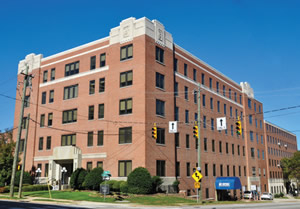
In a digital transformation, the North Carolina Community College System, a statewide network of public community colleges, has incorporate a custom machine-learning “Brain” across its 58 institutions.
The North Carolina Community College System (NCCCS), working with Tanjo, an award-winning artificial intelligence and machine learning company, is incorporating a custom machine-learning “Brain” across its 58 institutions. NCCCS’s “Brain” will continuously and automatically map, understand, and organize information throughout the community college network. This superhuman approach to data mining allows for optimal content discovery and is a necessary first step in digital transformation.
With about 700,000 students and more than 30,000 faculty and staff members, NCCCS produces countless educational innovations, courses, and best practices. With valuable content spread across 100 counties, traditional methods for sharing and storing are limiting. In addition to helping NCCCS map all its available content, the “Brain” allows the faculty, students, and administrators to harness the power of machine learning. For example, custom brain-scraping bots can be easily set up to notify users to new and relevant content related to a subject of interest. The “Brain” can further draft documents or create custom curricula for faculty based on knowledge shared.
“With so much content available to us across our network, it became apparent that we could do a better job of organizing and sharing that knowledge when and where needed more efficiently and effectively,” says Jim Parker, NCCCS CIO. “Tanjo’s machine-learning technology allows us to improve our collective intelligence while simultaneously mitigating otherwise tedious and costly tasks associated with data mining.”
All of the algorithms and search visualizations are created specific to the fundamental features of the content used by the NCCC system—ensuring greater adaptability and ease-of-use. Unlike third-party software or open web service, the “Brain” resides under the NCCC system’s control and bars data from flowing outside the NCCCS network.
www.tanjo.net
This article originally appeared in the College Planning & Management March 2019 issue of Spaces4Learning.