Cypress College Breaks Ground on Veterans Resource Center

CYPRESS, CA – Cypress College has broken ground on a Veterans Resource Center (VRC). The new VRC will be built in front of the current Student Activities Center (SAC) and connected to the existing building, which will be renovated.
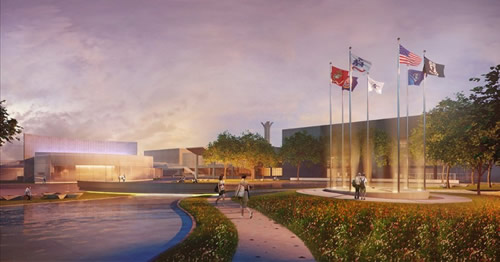
Cypress College Veterans Resource Center

The basic services associated with design and construction of the Student Activities Center and Veterans Resource Center of approximately 11,500 gross square feet will include a recreation/game room, kitchen, study rooms, computer labs, conference rooms, counseling spaces, offices/workrooms, and support spaces associated with the building program.

The building will be the centerpiece of the Veterans Education Resource Complex, which includes a tribute garden, veterans memorial bridge, and outdoor event plaza.

The project is slated for completion in 2020.

Featured

  • Phoenix School District Breaks Ground on New Prep Academy

    The Creighton Elementary School District near Phoenix, Ariz., recently broke ground on a campus replacement for Biltmore Preparatory Academy, according to a news release. The new space will allow the school to expand its enrollment by 50 percent for K–8 students and accommodate modern, collaborative learning styles.

  • Haws Corporation Marks 120th Anniversary

    Haws Corporation, which provides hydration and emergency safety solutions worldwide, recently announced that the company is celebrating its 120th anniversary this year, according to a news release.

  • USC Launches Major AI Initiative After $200M Gift

    The University of Southern California in Los Angeles, Calif., recently announced that it has launched a “transformational” new AI initiative thanks to a $200M gift, according to a news release. The project will leverage AI toward breakthroughs and innovations in subjects like the health sciences, business, security, and the arts.

  • Rethinking K-12 Schools as a Continuous Learning Experience

    Most students move through three or more separate facilities during their K-12 journey, yet the built environments they encounter at each stage have traditionally been designed in isolation, with little continuity in spatial language, learning philosophy, or physical resources. Each new school is a reset with different layouts, learning models, expectations, and ways of moving through a building. The next generation of school design is making the case that the first day of kindergarten and the last day of high school can and should feel connected through common support systems and infrastructure in the physical environment.