University of the Sciences Celebrates Grand Opening of Student Housing Complex

PHILADELPHIA, PA – Living & Learning Commons, a new residence hall at University of the Sciences in Philadelphia, opened this month. The 126,000-square-foot, 426-bed mixed use student housing complex will offer students on campus a place to sleep, study, and shop.
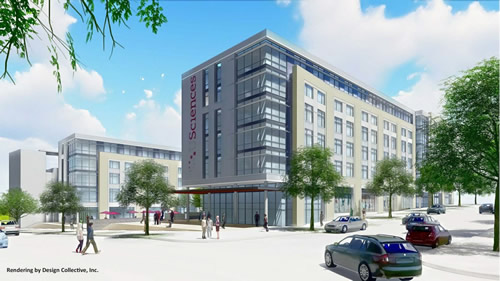
University of the Sciences student housing

The facility includes state-of-the-art classroom, retail, living, and learning spaces and sets the standards for dynamic living and learning communities for science and healthcare students. The construction has incorporated sustainable features to achieve Green Globe certification.

The Commons includes amenities such as double occupancy rooms with private bathrooms, smart laundry facilities on each floor, student lounge and study spaces, multi-use classrooms, and two retail spaces. One of the retail locations will house an ATI Physical Therapy clinic which will be open to the public. The second retail tenant has yet to be announced. 

The Harman Group provided structural engineering services for the project, working with developer Campus Apartments, and Baltimore-based architecture firm, Design Collective.

Featured

  • Opportunity by Design Framework

    Opportunity by Design

    Educational improvement efforts often focus on curriculum, instruction, assessment, professional development, and intervention systems while treating the physical school building as background. But school design is not a passive backdrop to learning — it is a structural lever for equity.

  • Tomball ISD Opens New Tomball West High School

    Tomball Independent School District in Tomball, Texas, recently celebrated the official opening of Tomball West High School, the district's third comprehensive high school, with a community ribbon-cutting ceremony, according to a district news release.

  • Growing Allied Health Workforce Demands Fueling Greater Need for Higher Education Facilities

    With the demand for healthcare professionals at an all-time high, colleges and universities are challenged with supporting the workforce demands in their own communities. Careers in allied health generally require specific training and/or certification, with some positions requiring degrees, certified credentials, and continuing education.