New Children’s Center Underway at Boston University
BOSTON, MA – Construction is underway on an expanded facility for Boston University (BU) Children’s Center, a full-time early childhood education program for children of BU faculty and students.
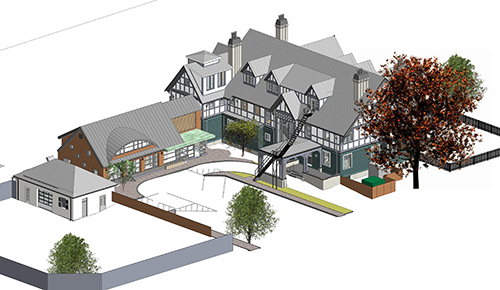
An existing, historic 17,000-square-foot house at 10 Lenox Street in Brookline, MA, will be fully renovated and Kaplan Construction will build a new 3,000-square-foot building in the demolished space that will connect to the main facility. The house will undergo a complete rehabilitation with structural updates, new stairs and elevator, new utility services, and all new mechanical, electrical, and plumbing (MEP) systems.
The outdoor area will feature a combination of natural and manufactured play spaces, and several mature trees will be preserved to achieve a backyard-like atmosphere.
Once completed, the Children’s Center will have the necessary space to accommodate separate infant, toddler, pre-K, and preschool classrooms; free play areas; and indoor gross-motor areas. The building is being designed to meet LEED certification and will be ADA accessible. The Center is scheduled to open in Spring 2020.