Pool-Based Saliva Testing Program Coming to K–12
- By Dian Schaffhauser
- 02/01/21
A company that does
develops COVID-19 testing management programs for colleges and
universities is bringing its services to K-12 schools. CoVerified
is working with Mirimus
Clinical Labs, which performs saliva pool testing, to
launch CoVerifiedPool,
a mechanism for testing student populations regularly and affordably.
Under this approach,
24 individual saliva samples are pooled for testing in the lab rather
than at a collection site, and samples are processed as a single
test. According to the companies, the technique does away with the
"invasive" nasal swab testing and may work better for
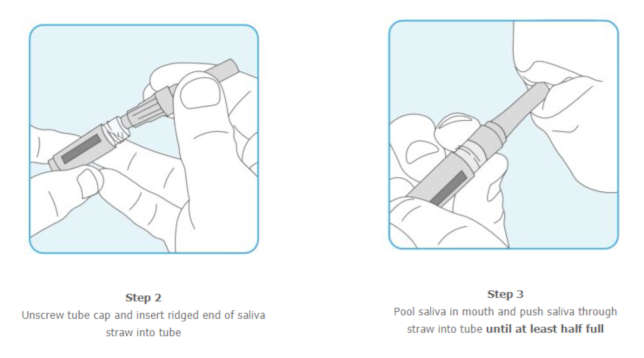
"young student populations." With the SalivaClear
approach, the saliva is collected at home, which decreases the need
for on-site staffing to perform the testing.
The process has been
implemented at the Wellesley
Public Schools District in Massachusetts, where
students and staff in middle and high schools undergo weekly testing.
The model, according to participants, has enabled the district to
reopen.
A district web
page dedicated to the subject explained that student
kits will be distributed in middle school home rooms; at the high
school level, students pick up their kits in the cafeteria. The
individual kits are registered online and the saliva is collected at
home on Monday or Tuesday mornings and samples dropped off that same
day in dedicated receptacles, keeping staff and students from the
same building in the same pool. Those are shipped off to Mirimus'
location in Brooklyn, NY and results are made available within 24 to
48 hours. When the pool includes a positive sample, it's
automatically retested, but in "pairs." If one of the pairs
shows a positive result, the two participants in that pair are asked
to do another saliva sample, and those individual results are
returned within a couple of hours.
While the district
mandates testing for its 1,300 staff, it doesn't do that for students
as a requirement for returning to campus. However, it does "highly
encourage" participation as a way to keep the schools safe.
Anonymous testing results are made publicly available through an
online dashboard.
Along with testing,
the district also has put other safety practices in place: mask
wearing, hand washing and physical distancing.
Much of the cost for
Wellesley's testing program was covered by a combination of grants,
donations and CARES Act relief funding.
"Saliva-based
pool testing is a critically important approach for minimizing risk
as we get students back into the classroom," said Brandon
Busuito, a medical doctor and co-founder and CEO of CoVerified, in a
statement. "A holistic software and testing approach tailored to
unique needs of students and educators is crucial to achieving
success in schools. Even as the rollout of COVID-19 vaccines
continues, robust surveillance testing is key to ensuring a safe
learning environment."
CoVerifiedPool is
expected to be fully available starting on Jan. 31, 2021.
About the Author
Dian Schaffhauser is a former senior contributing editor for 1105 Media's education publications THE Journal, Campus Technology and Spaces4Learning.