Oregon State University to Move Forward with Wave Energy Project
On Monday, March 1, federal energy regulators gave Oregon State University permission to move forward with an offshore wave energy testing facility.
The PacWave South project is meant to further the development of wave energy technology, which uses the motion of water and currents to produce electricity. Waves off the coast of Oregon have been discovered to have a much higher wave energy generation potential than nearby California or Washington, at least by coastal area. The Oregon Department of Energy estimates that the near-shore waves could eventually be able to generate power for 28 million homes every year.
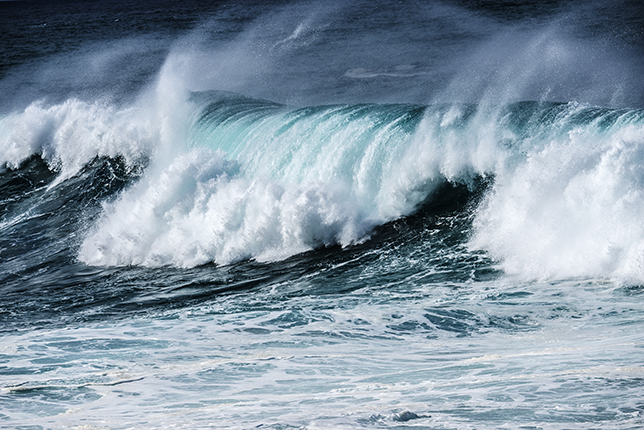
The university project must pass a final review period before it can begin construction, but it has already received a license from the Federal Energy Regulatory Commission. “It’s huge,” said Burke Hales, the OSU project’s chief scientist. “It’s the first license of its type to be issued in the United States.”
According to the project’s website, PacWave South will be a wave energy test facility that is grid-connected, accredited, and pre-permitted. Because the entire regulatory process is being done before construction starts, it will be ready to test all expected types of wave energy devices, save millions of dollars, and allow development and optimization of those designs to move more quickly.
The construction will cover two square nautical miles of ocean and include four ocean berths connected to shore by a 7-mile cable route. Infrastructure will include data cables, electric cables, and a grid connection station on land, giving companies easy and immediate access to the wave energy converters. Across its four berths, it will be able to test different technologies simultaneously, and it has space for up to 20 devices.
Oregon State University is developing the project with the U.S. Department of Energy, the State of Oregon, and local stakeholders.
“We hope to be moving forward this summer with groundbreaking for building our shoreside facility,” said Hales. He also said that the underground and sub-surface work for running transmission lines should begin this year, also. They aim to begin installing the test facility’s offshore components in 2022.
About the Author
Matt Jones is senior editor of Spaces4Learning. He can be reached at [email protected].