iCleanse Launches Mobile Phone Disinfection Device
Device sanitation solutions company iCleanse recently launched its newest product, the iCleanse Swift UV. The Swift UV serves as a chemical-free UV-C disinfection station for mobile phones and was created for a wide variety of markets including airports, retail stores, restaurants, doctors’ offices, corporate offices, higher education environments, and more.
According to a description on the product’s website, the Swift UV uses UV-C technology to kill up to 99.9% of germs and other infections pathogens—including SARS-CoV-2, the virus that causes coronavirus—in as little as 15 seconds. The freestanding station features a phone-cleansing unit and a hand-sanitizer dispenser so users can retrieve their newly cleaned devices with clean hands.
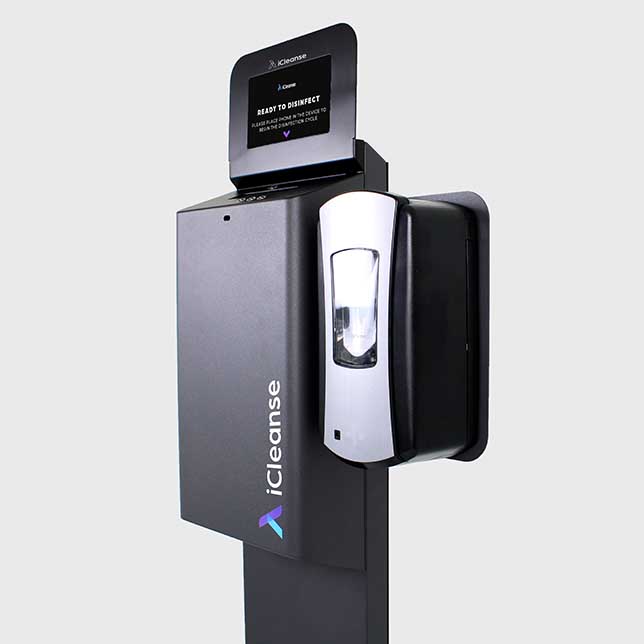
Photo credit: Thomas Public Relations
A product announcement video shows iCleanse CEO Chris Allen giving a product demonstration. Users place their phone in a slot at the top, where it descends into the machine. The slot is large enough to accommodate most phones and cases, including Otterboxes. A screen displays the progress of the cleaning process. In the meantime, users can get a squirt or two of hand sanitizer (any brand) for an increased level of protection. The disinfected phone rises back out of the slot for retrieval.
Some other key features of the product include service contracts, an informational display that can show advertisements or company announcements, and an in-house customer support center. The product is patented and GSA approved, and it has been independently lab-tested, according to the video. Each device’s UV-C lamp has a lifespan of about 50,000 hours.
“The new iCleanse Swift UV will change the way we think about disinfection on the fly,” said Allen. “It’s the easiest way for businesses to prevent the spread of viruses amongst employees and customers. By disinfecting our smartphones, we help break the cycle of acquiring and passing along viruses, which is essential these days.”
About the Author
Matt Jones is senior editor of Spaces4Learning. He can be reached at [email protected].