VIVOTEK Releases Update to VAST 2 IP Video Management Software

IP surveillance solutions provider VIVOTEK has released an update to its VAST 2 IP Video Management Software.
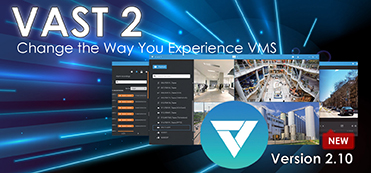
VIVOTEK VAST 2 upgrade

The new version, 2.10, adds features including an embedded web browser on the view cell, an added watch list for easy management, evidence image of license plate recognition (LPR) cameras, and an access control solution.

“VIVOTEK’s VAST 2 is an easy-to-use IP Video Management Software solution,” said David Liu, President of VIVOTEK USA, Inc. “It comes with exciting advancements, such as easy operation on single or multiple monitors, custom layout to accommodate both corridor and panorama orientations, rapid export of multichannel video, and the acquisition of VCA analytics and cybersecurity attack events from VIVOTEK cameras and substations in a hierarchal system structure.”

VIVOTEK was founded in 2000 in Taiwan. It has offices and subsidiaries in the United States, Europe, India, the Middle East, Latin America, and Japan. It partners with more than 180 distributors in 116 countries.

About the Author

Matt Jones is senior editor of Spaces4Learning. He can be reached at [email protected].

Featured

  • Girl Sitting at Library Desk, Using Laptop

    How Campus Design Shapes the Finals Week Experience

    Academic performance is not just about preparation. It is closely tied to how students manage stress, maintain their energy, and shift between work and recovery modes. Much of that is influenced, directly or indirectly, by design.

  • ZeroEyes, Academic Innovators Partner to Provide Safety Solutions

    ZeroEyes, which produces a multi-analytics weapons detection and threat intelligence platform, recently announced a partnership with Academic Innovators, according to a news release.

  • Lawrence Group Announces Three New Hires

    Integrated planning and design firm Lawrence Group, based in St. Louis, Mo., recently welcomed three new staff members, according to a news release.

  • Rethinking K-12 Schools as a Continuous Learning Experience

    Most students move through three or more separate facilities during their K-12 journey, yet the built environments they encounter at each stage have traditionally been designed in isolation, with little continuity in spatial language, learning philosophy, or physical resources. Each new school is a reset with different layouts, learning models, expectations, and ways of moving through a building. The next generation of school design is making the case that the first day of kindergarten and the last day of high school can and should feel connected through common support systems and infrastructure in the physical environment.