Armstrong Introduces Direct-Attach Ceiling, Wall Panels

Armstrong Ceiling & Wall Solutions recently introduced its Tectum Create! Direct-Attach line of ceiling and wall panels. The textured panels come in a variety of standard and custom designs to add flair and aesthetics to any space. The 1”-thick panels also provide acoustic benefits, featuring a Noise Reduction Coefficient (NRC) of up to 0.85 depending on the method of installation. According to a news release, the panels could serve as a retrofit solution for noise reduction.
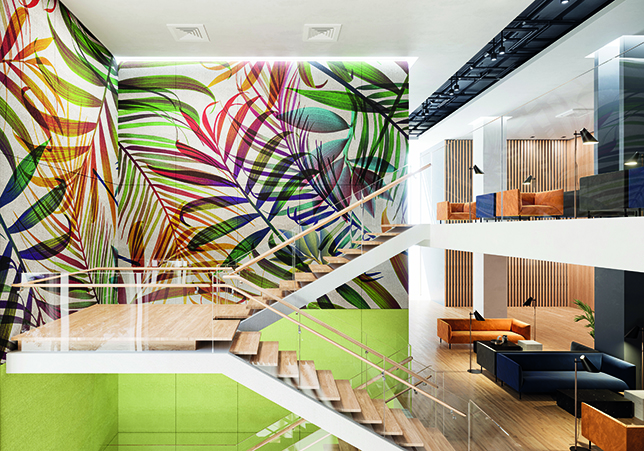
Armstrong Tectum Create Direct Attach Panels
Photo Courtesy of Armstrong World Industries

The panels come in four standard designs: Textured Hex, Exposed Brick, Rustic Plank and Steady Wave. Armstrong can also create custom designs to match any client’s aesthetic. The repeated panel patterns allow the panels to span as far as necessary both horizontally and vertically along a surface.

The panels are available in two sizes: 23 ¾" x 48" and 47 ¾" x 96" with long and short beveled edges. As the name suggests, they can attach directly to a variety of interior wall and ceiling surfaces. The panels are made from cementitious wood fiber and are part of the organization’s Sustain portfolio. They’re also part of the CleanAssure portfolio of easily disinfectable, cleanable products to help make spaces safe and clean.

About the Author

Matt Jones is senior editor of Spaces4Learning. He can be reached at [email protected].

Featured

  • Chartwells Launches Campus Dining Evaluation Framework

    Contract food-service management provider Chartwells Higher Education recently announced the launch of BLUEPRINT, according to a news release. The evaluation framework was designed to provide a data-driven and customizable roadmap towards optimizing campus dining services and, by extension, the student experience.

  • school building with glowing circuit board patterns

    AI Is Coming to Schools — But Most School Buildings Still Run on Institutional Memory

    As school districts race to introduce AI into classrooms, administration, and curriculum planning, another conversation is happening behind the scenes: How prepared are school facilities themselves for the operational demands AI will create?

  • Rethinking K-12 Schools as a Continuous Learning Experience

    Most students move through three or more separate facilities during their K-12 journey, yet the built environments they encounter at each stage have traditionally been designed in isolation, with little continuity in spatial language, learning philosophy, or physical resources. Each new school is a reset with different layouts, learning models, expectations, and ways of moving through a building. The next generation of school design is making the case that the first day of kindergarten and the last day of high school can and should feel connected through common support systems and infrastructure in the physical environment.

  • Minnesota District Converts Middle School into Community Hub

    White Bear Lake Area Schools in White Bear Lake, Minn., recently announced the end of a major renovation project that converted a former middle school into a new centralized district and community hub, according to a news release.