Gen Z Students Look for "Alone-Together" Space in College Housing
- By Dian Schaffhauser
- 01/18/22
Those students born between 1997 and 2012, otherwise known as Generation Z or Gen Zers, are redefining expectations for college housing and services, according to an architectural firm that specializes in working with colleges and universities.
In a recent appraisal, KWK Architects said Gen Z’s preferences are defined by a few distinct characteristics.
According to Principal Paul Wuennenberg, because they "have never known life before technology," these young people expect Wi-Fi and networking as part of the housing package. And because shopping online is their norm, residence halls need to accommodate the ability for them to receive deliveries and packages and have safe access to those 24/7.
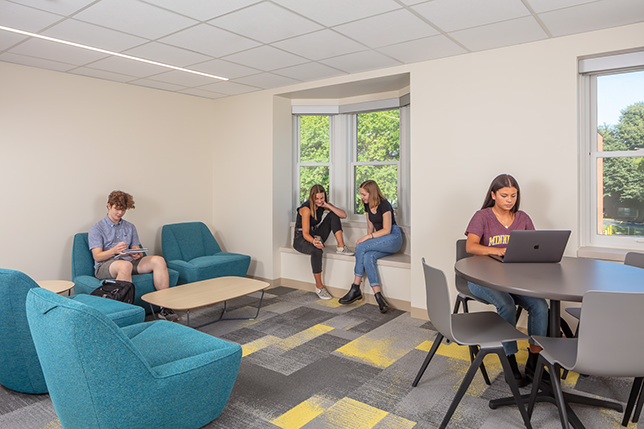
Alone-together spaces will be part of new student housing projects, to cater to the current generation of college students. Source: KWK Architects
The universities Gen Zers attend should expect to incorporate digital means for support ("the heat isn't working," "Wi-Fi is down"), such as the use of apps to field student complaints and needs and communicate with students in real time, also 24/7.
In spite of the Gen Zer being "value conscious," having witnessed their Generation X parents struggle through the Great Recession, they're also willing to pay for amenities "and will pay more if they see it provides them value," Wuennenberg noted.
Providing spaces for gaming will also be important, since most of these students report that they game at least once a week.
Also, in spite of always having their devices close at hand, Gen Zers still want in-person communication and socialization. "Gen Z is more independent in their learning style, but they want to be in a communal space, not isolated – the concept of being 'alone together,'" as Wuennenberg explained.
He envisions greater demand for studio spaces and "micro units" in residence halls. Similarly, he anticipated that Gen Z students would want more opportunities to cook for themselves and social spaces where they can work in the “alone together” scenario.
"I think the combination of wanting privacy, having fewer people share restrooms, and the desire for maximizing value will encourage these types of units," he said. "Allowing them choices will be extremely important."
About the Author
Dian Schaffhauser is a former senior contributing editor for 1105 Media's education publications THE Journal, Campus Technology and Spaces4Learning.