University Of Saint Joseph Expands O'Connell Athletic Center
The University of Saint Joseph in West
Hartford, Conn., engaged JCJ Architecture to
renovate and expand the school’s existing O’Connell
Athletic Center into a flexible, multi-sport
arena and venue to accommodate existing and
new university programs. The private Catholic
university — formerly St. Joseph’s College —
became co-educational in 2018 and is undergoing
a transformation as it incorporates men into its
programs, increases the number of varsity sports
and expands its offerings to the wider campus. The
new, 31,277-square-foot facility hinges on health
and wellness and serves as a multifunctional nexus
of student activity that extends beyond traditional
athletic programs.
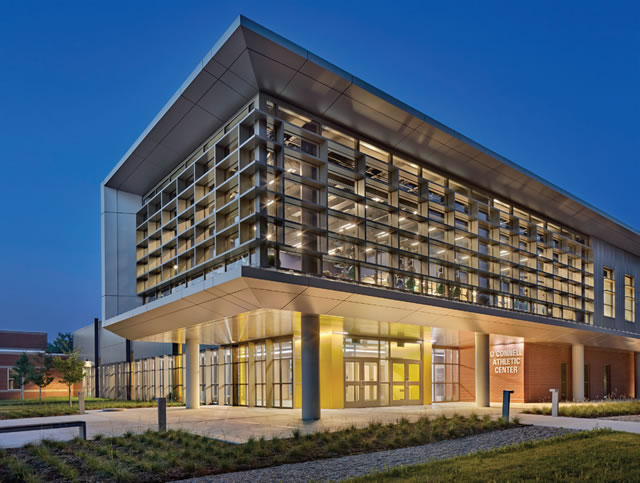
PHOTO © ROBERT BENSON PHOTOGRAPHY
As JCJ Architecture’s fourth new building
for the campus, the project is a continuation of a
longstanding collaborative relationship between the
firm and the university. The university selected JCJ
Architecture to spearhead the project as the need to
expand its existing single-gender athletic facilities
became apparent following the integration of men
into the student body. Furthermore, the school’s
leadership wanted a facility that would benefit the
full campus community and provide social opportunities
outside of athletics. The design is accessible
for pedestrians and creates a stronger connection
to the central part of the campus, eliminating the
parking lot that had previously set the building
apart. Additionally, the facility is situated directly
across the street from the Student Center, creating
a central hub for student activity.
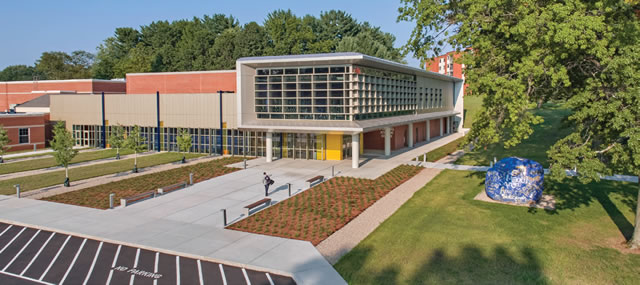
PHOTO © ROBERT BENSON PHOTOGRAPHY
JCJ Architecture spearheaded the architecture
and interiors of the new facility. The firm sought to
reconcile the traditional red brick colonial aesthetic
of the existing campus buildings with the modern
and dynamic new facility that would signal the
institution’s commitment to reinvention. The resulting
design marries the red brick materiality and
yellow doorways that are a hallmark of all buildings
on campus with sleek and modern glass forms, clean lines, cantilevers and projections. Expansive
windows animate the façade and highlight the
activity taking place within. The university’s colors,
blue and yellow, are integrated into the exterior
glass to add another layer of connection and visual
excitement. The facility as a whole establishes an
energetic visual focus at the end of the campus.
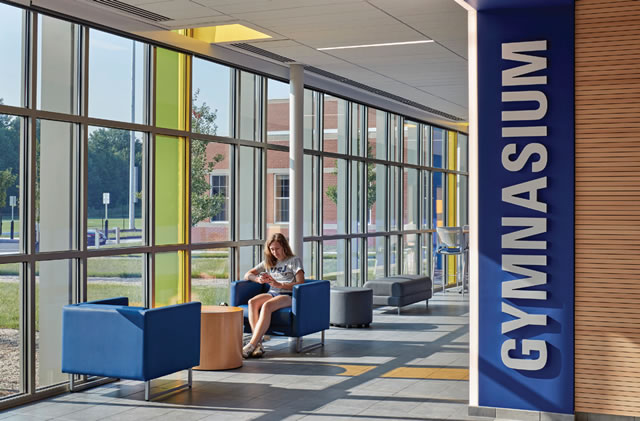
PHOTO © ROBERT BENSON PHOTOGRAPHY
The entrance to the building is awash with natural
light that streams in through the south-facing
windows, which are outfitted with sun screens and
shading overhangs. The emphasis on natural light
and warm wood paneling extends a warm welcome
to visitors, while the large windows enhance a
visual connection to the campus. Interior finishes
such as sports branding and a wooden trophy wall
tie in a sense of athletic excitement to differentiate
the guest experience from that of other buildings
on campus. The main lobby is a light, airy and flexible
concourse that serves as both a ticketing and
concessions area for game nights and a comfortable
space with high-top tables and casual furniture for
students to study or socialize. The multifunctionality
of the lobby underscores the central theme of
flexibility.
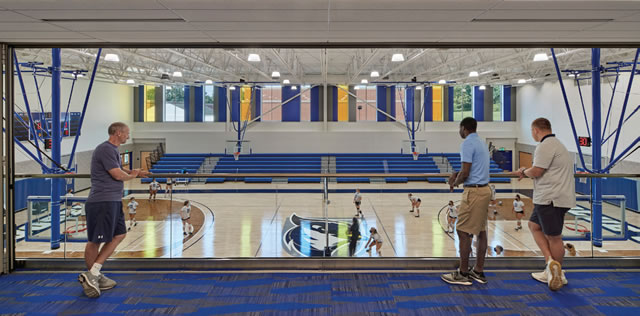
PHOTO © ROBERT BENSON PHOTOGRAPHY
From the outset of the project, the program
hinged on the creation of a full, NCAA-regulation
basketball court. The wooden ceiling elements in
the lobby continue into the central gymnasium and
wrap around the interiors, providing seamless connectivity
between the spaces. Four state-of-the-art
gender-neutral locker rooms are usable by different
teams as the seasons change. Further highlighting
the central tenets of connectivity and flexibility
are athletic staff offices with visual access to the
court and a skybox seating area overlooking the
arena, which can function as both a VIP space and
an additional classroom. To widen the appeal and
usership of the facility, multiple training rooms
provide opportunities for competitive athletes to
train as well as the larger student body to exercise.
Additionally, the student health services suite,
formerly housed in a smaller outlying building,
now resides on the ground floor of the new facility,
emphasizing a focus on wellness.
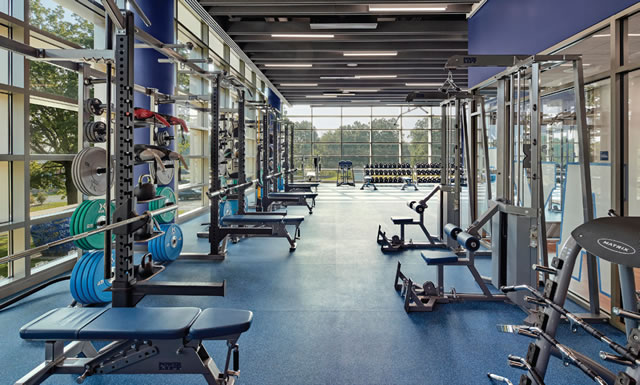
PHOTO © ROBERT BENSON PHOTOGRAPHY
This article originally appeared in the Summer 2022 issue of Spaces4Learning.
About the Author
James LaPosta has dedicated his career to design that advances the future of teaching and learning. LaPosta is a past national Chair of the AIA’s Committee on Architecture for Education and has contributed to peer and industry organizations that seek to evolve the profession’s approach to education design. In 2013, he was elevated to Fellow of the American Institute of Architects for his work elevating the practice of architecture, and in particular, education design.