Delivering Successful Career & Technical Education (CTE) Spaces that Spark a Sense of Curiosity
Why is Career & Technical Education so important for today’s students?
School districts across the country are rethinking the conventional education pathways and traditional brick and mortar schools. We are seeing a continued and positive movement toward creating opportunities for students outside of classrooms to pursue hands-on learning opportunities in real-world settings that spark curiosity, which makes our brains more receptive to learning and engages students. Today’s Career & Technical Education (CTE) spaces often include applied sciences, modern technologies, career development and trade skills.
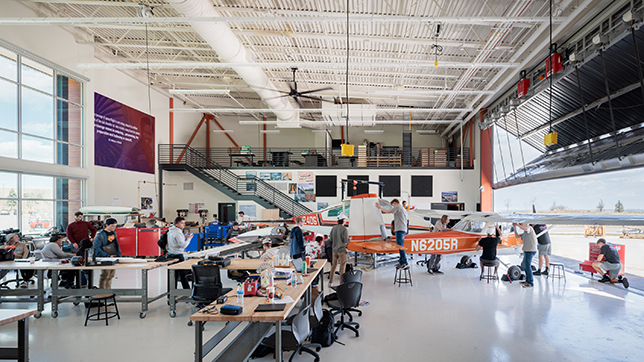
Images courtesy of David Lauer
Our firm has been involved in the programming and design of over 100 CTE spaces for high schools and higher education facilities. Our combined expertise and knowledge spanning K–12 through higher education environments gives us a unique perspective on the design of CTE spaces for all ages and why they are so critical to some students’ future professional success.
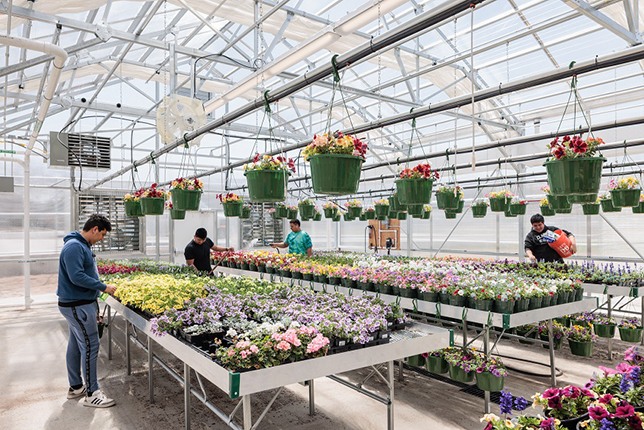
After designing many CTE, makerspace and STEM spaces, we have found that creating successful spaces to spark curiosity, collaboration and confidence for students starts with several key programming and design considerations.
- Flexibility and Adaptability: Given the continual changes in the job market and industry demands, CTE spaces must be flexible and able to evolve. Additionally, spaces should be able to host various activities to meet the changing curriculum. With thoughtful planning, spaces can be designed to be adaptable while still meeting today’s specific program needs.
- Integration of Industry Partners: Integration of industry partners provides valuable input into the planning of simulation and teaching programs to help provide real-world knowledge and skills. Industry partners can also offer guidance and preparation for certification and accreditation programs, as well as access to the latest industry trends. Lastly, these partners can act as professional mentors for students.
- Equipment-Based Planning: The large and specific equipment required for many CTE programs has a direct impact on the design of the space. Safety zones and flow around the equipment, specialized electrical and ventilation systems, and the tolerances required for proper function of the equipment require careful planning during early phases of design. Incorporating equipment considerations into initial planning also allows schools to track the cost impact early.
- Identification of Program Synergies: Identification of program synergies allows for recognition of potential collaboration opportunities between programs and spaces that can share areas and storage. By finding programmatic and physical areas of overlap, the educational planners can assist in creating more efficient spaces and building opportunities for student collaboration. Finding program synergies is important when planning student commons spaces and other shared areas.
- Connection to the Outdoors and Site Design: Maker Spaces and CTE spaces often benefit from a direct connection to outdoor spaces with either garage doors or direct access to an outdoor patio. This allows for learning to go beyond the classroom and stimulates movement and creativity. Flexibility between indoor and outdoor spaces allows for Next Generation learning and more realistic simulation experiences.
Site design also involves everything from providing convenient and adequate parking for students, staff, and community members, encouraging patronization of student work, to planning appropriate delivery and service entrances based on the types of programming offered. It also addresses facility visibility, which, along with parking, is a key element of community recognition and support of the programs.
Using these key considerations and research-based design, we’ve planned and designed a variety of CTE spaces to spark students’ natural sense of wonder, which leads to a deeper understanding of the subject matter. From culinary and construction to theater, art and performing arts, engineering, healthcare and a variety of shop spaces, these project-based learning centers allow students to gain practical knowledge and exposure to real-world scenarios.
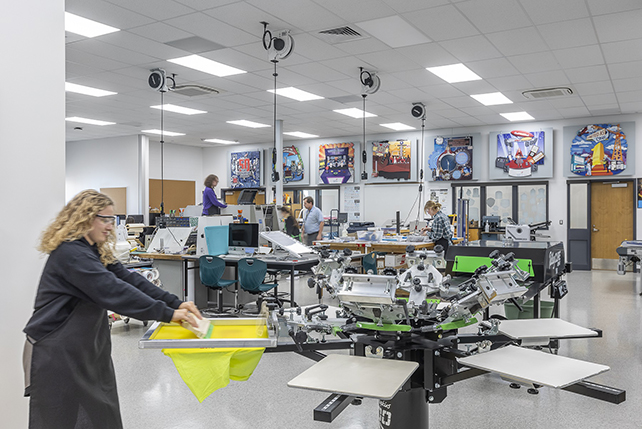
From our research, we know that our brains release dopamine when we are curious. Students become more motivated to dig deeper, ask questions and seek answers in these environments. Instead of passively receiving information, they actively participate in the learning process. By combining curiosity and project-based learning, students become active learners who take ownership of their education. To further emphasize the value of CTE spaces, 70 percent of CTE students say their program helped them earn better grades. The end result of well-designed, curiosity-sparking CTE spaces is a real-world education preparing students to be adaptable, innovative, and successful in their chosen careers and benefiting the learners, educators, administrators, and our future workforce.
About the Author
Adele Willson is Managing Principal of Hord Coplan Macht’s office in Denver, Colorado, and is the Market Sector Leader for the firm’s PK-12 practice.