Creating Long-Term Sustainability on College Campuses Through Fair Student Housing
- By Beryl DePalma Alder
- 08/07/25
Access to stable, affordable, and quality housing is foundational to student success and institutional vitality. When students feel valued through well-maintained housing, adequate living space, and inclusive amenities, they are more likely to develop a sense of belonging and deeper connection to their institution. This connection often extends beyond graduation, inspiring alumni engagement and giving, which in turn strengthens the university and the broader community. Additionally, well-designed student housing facilitates a vibrant campus culture, where students develop a strong sense of school pride.
The quality of student housing can have a significant impact on an individual’s college experience. Today’s higher education institutions face mounting challenges, including declining enrollment, low retention rates between the first and second years, and a rise in student mental health concerns. Thoughtfully designed living spaces can help address these issues by creating environments that promote both academic focus and personal well-being. Features such as communal study spaces, wellness-focused amenities, and intentional social gathering areas address the need for connection, reduce isolation, and prioritize students’ mental health—both of which are critical to student satisfaction and persistence.
Tailored Spaces for a Thriving Campus Life
When designing for a large population of students, it is necessary to consider the broad range of personalities, backgrounds, and personal needs that students bring to campus. A prime example of this inclusive strategy is the New Residence Hall at Tennessee State University (TSU), the first new residential facility built on campus in 25 years.
Completed in 2022, this project emerged in direct response to a growing housing shortage at TSU. The university partnered with Moody Nolan to deliver 700 beds designed to meet the evolving needs of its student body. This hall reflects a more inclusive and modern approach to student housing, recognizing the diverse needs of today’s college students. It offers a diverse range of housing options including single private units, double semi-suite units and quad apartment-style units. This gives students the flexibility to choose a living arrangement that best matches their lifestyle and personal preferences. Whether a student values solitude, a quieter shared environment, or a more social apartment-style setting, the variety of options ensures they can find a space where they feel at ease.
In response to growing awareness around accessibility and comfort, the first level features single apartments designed for students with service animals—offering more space and direct outdoor access.
Prioritizing natural engagement, residential floors include numerous lounges, meeting spaces, community kitchens, four retail dining venues, a convenience store, as well as fitness and recreation facilities, all strategically distributed throughout the building. These shared spaces are designed to support spontaneous interaction, whether through a quick chat, impromptu study sessions, or casual moments spent cooking in the communal kitchens. Additionally, a salon located on every other floor provides another inviting space for students to connect and unwind. The result of this design is a dynamic, mixed-use facility that fosters academic and community relationships organically.
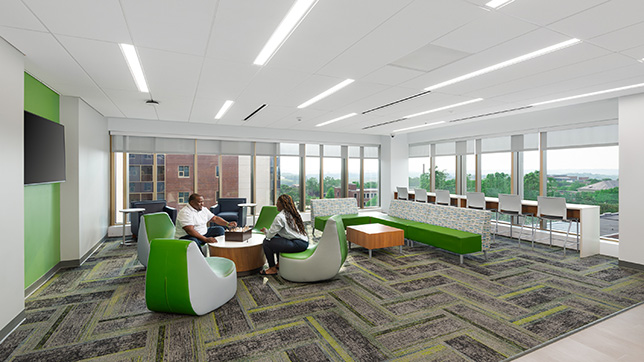 Tennessee State University New Residence Hall
Photography by Gabe Ford
Fostering Connection and Mental Well-Being
Socializing is key to establishing a healthy campus culture. Beyond academic involvement, the best places for students to connect is in their residence halls, which often serve as hubs for campus life. This is particularly crucial during a student’s first year, a period when many report feeling isolated. According to a 2024 survey by Active Minds in collaboration with TimelyCare, 64.7 percent of college students reported feeling lonely, and those students were found to be over four times more likely to report psychological stress. Research shows that thriving students are more likely to engage in healthy habits, including socializing and spending time outside. This flourishing can happen in the right setting, by integrating communal spaces that encourage natural engagement and access to nature. Improving campus culture in this way doesn’t just enhance the student experience—it acts as a preventative measure that supports student mental health.
Morgan State University’s Thurgood Marshall Hall exemplifies how strategic housing can strengthen both community and wellness. To further long-term growth on this HBCU campus, Thurgood Marshall Hall catalyzed ongoing student recruitment and retention. Both the University and our design team, in collaboration with Hord Coplan Macht, focused on enhancing student success with the creation of a vibrant new live-learn community that feels like home. The residence hall provides semi-suite and apartment-style housing, including 670 beds for undergraduate and graduate students, and a 24-hour dining facility serving the entire student population with a variety of food options to suit different preferences. Group study areas support academic collaboration outside the classroom, while the on-site fitness center and convenience store cater to students’ evolving interests and daily needs.
The goal was to create a “live, dine, learn” hub, which was accomplished through the incorporation of these amenities and by providing robust space for gathering. Working to address the lack of mental health resources on college campuses, the hall also has a satellite location of the Morgan State Counseling Center, which offers one-on-one and group counseling sessions for students who seek mental health support.
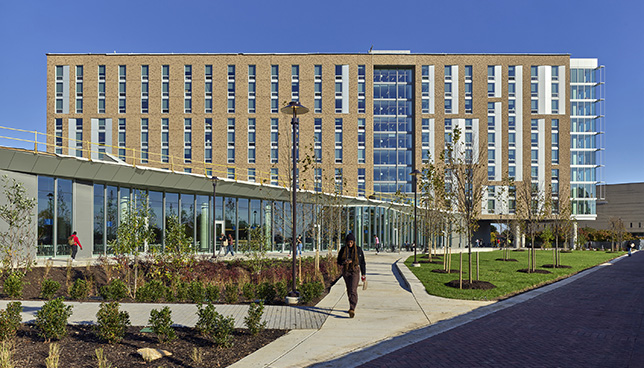 Morgan State University Thurgood Marshall Hall
Photography by Gabe Ford
Having a physical link to the outdoors creates a calming space for many students who may experience high stress. As a result, residence halls are incorporating more outdoor spaces where students can retreat. The New Residence Hall at Northern Kentucky University is occupied by nearly 300 first-year students and responds to the university’s desire to cultivate a strong residential community. Designed by Moody Nolan in partnership with Lord Aeck Sargent, the five-story facility features an outdoor plaza and surrounding green space that seamlessly extend the interior environment.
Ample space surrounds a nearby central community kitchen where students can eat, gather, socialize, and study. The thoughtful integration of communal amenities with accessible green areas reflects the university’s commitment to a holistic residential experience.
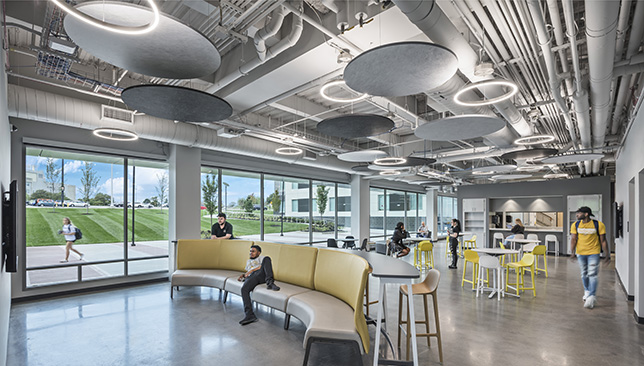 Northern Kentucky University New Residence Hall
Photography by Cory Klein
A Sense of Identity and Pride
Branding and identity play a powerful role in shaping how students connect with their living environments, often becoming a meaningful source of pride and a key part of their college experience.
A residence hall with a distinctive identity, such as Thurgood Marshall Hall at Morgan State University, does more than provide housing; it creates a sense of belonging rooted in purpose and legacy. Named in honor of Baltimore native Thurgood Marshall, former Associate Justice of the U.S. Supreme Court, the hall pays tribute to his enduring civic contributions through environmental design elements integrated throughout the space. This type of branding builds excitement and ownership among residents, promoting a sense of pride that often extends into how students view themselves within the broader campus community. Over time, this identity contributes to a hall’s legacy, shaping traditions, resident expectations, and even alumni nostalgia—demonstrating a well-branded residence hall can become a symbol of campus culture.
As the demands on today’s college students continue to evolve, so too must the environments in which they live and learn. When students feel that their university not only met their academic needs but also supported their personal growth into adulthood, they are far more likely to remain engaged long after graduation. The examples of Tennessee State University, Morgan State University, and Northern Kentucky University demonstrate that intentional, inclusive housing design can be a powerful tool to help students become rooted in their institutions, cultivating lifelong growth.