From Concrete Warehouse to Innovation Hub: Accelerating Sustainability at Stanford
- By CAW Architects
- 04/09/26
The most urgent sustainability challenges of our time require more than just academic research; they require speed, interdisciplinary teamwork, and a direct line to real-world application. When Stanford University launched its Doerr School of Sustainability Accelerator program, the goal was to fast-track research into tangible solutions. Rather than commissioning a new structure, the university looked to a relic of the campus's industrial past — a former publishing warehouse — to serve as the mission's headquarters.
The design challenge was significant. The existing structure was an uninspiring concrete box characterized by fragmented layouts, poor insulation, and almost zero natural light. Turning a windowless, industrial shell into an inviting hub for global policymakers and investors required a radical reimagining of how light and people move through the space.
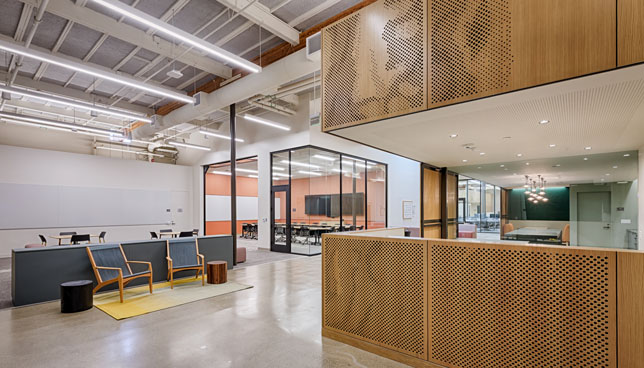 Doerr School of Sustainability Accelerator (Photo: Marco Zecchin, courtesy of CAW Architects)
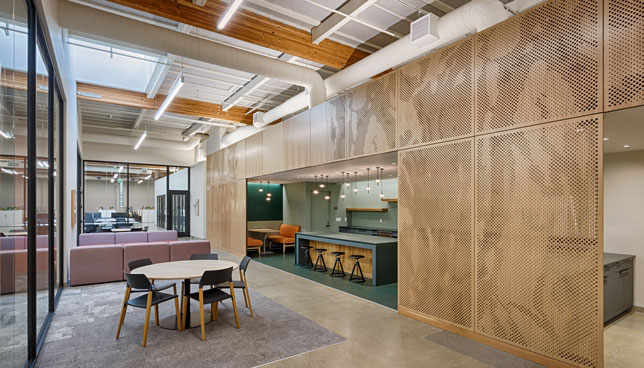 Doerr School of Sustainability Accelerator (Photo: Marco Zecchin, courtesy of CAW Architects)
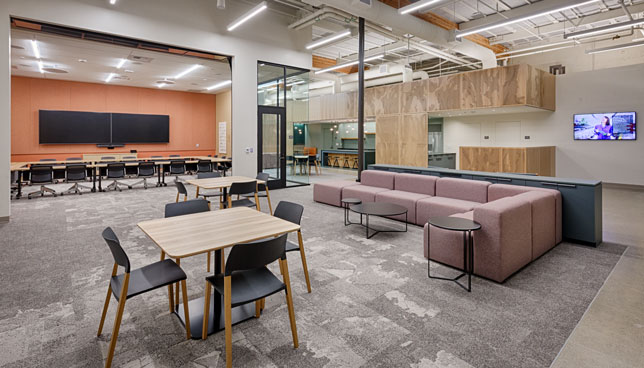 Doerr School of Sustainability Accelerator (Photo: Marco Zecchin, courtesy of CAW Architects)
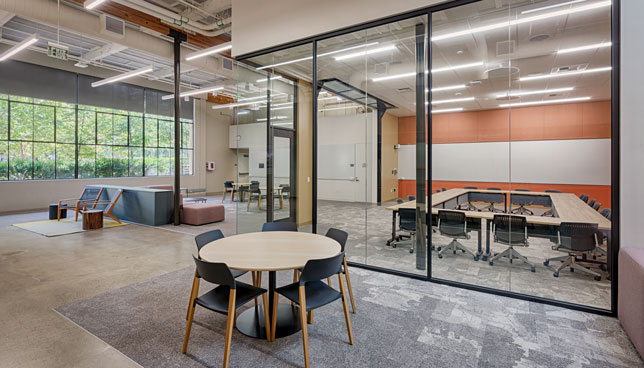 Doerr School of Sustainability Accelerator (Photo: Marco Zecchin, courtesy of CAW Architects)
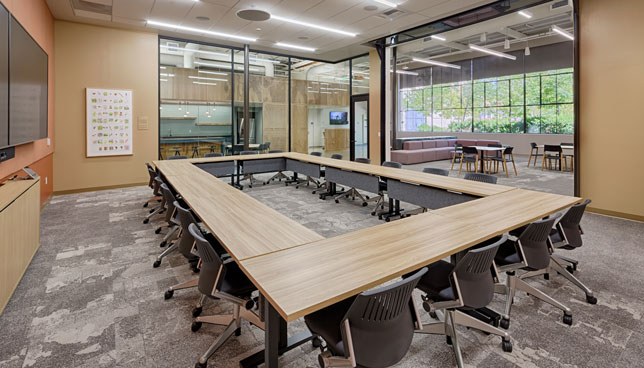 Doerr School of Sustainability Accelerator (Photo: Marco Zecchin, courtesy of CAW Architects)
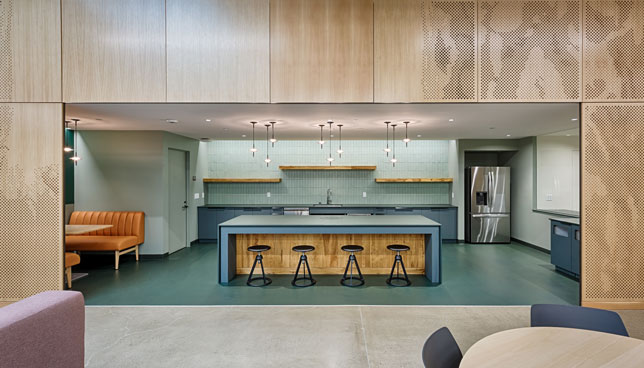 Doerr School of Sustainability Accelerator (Photo: Marco Zecchin, courtesy of CAW Architects)
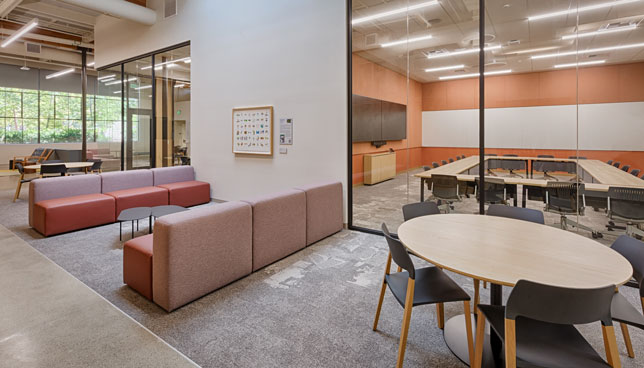 Doerr School of Sustainability Accelerator (Photo: Marco Zecchin, courtesy of CAW Architects)
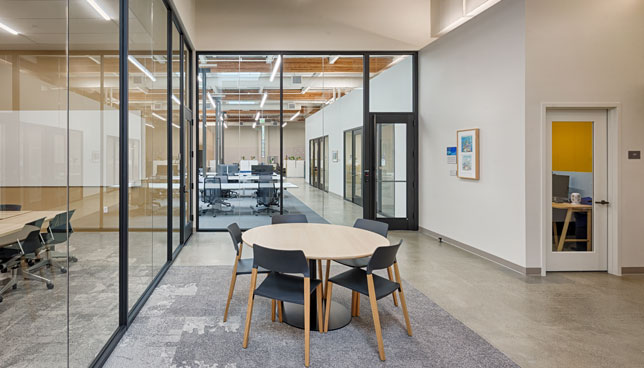 Doerr School of Sustainability Accelerator (Photo: Marco Zecchin, courtesy of CAW Architects)
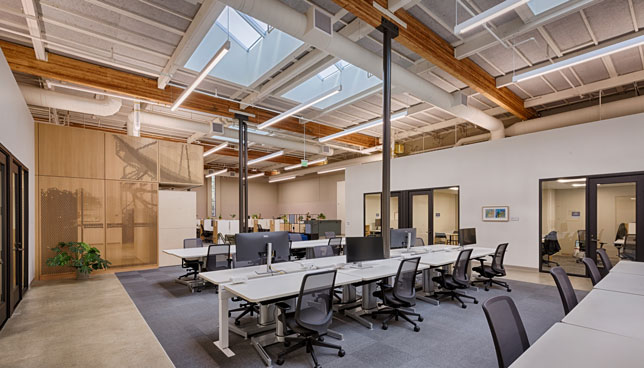 Doerr School of Sustainability Accelerator (Photo: Marco Zecchin, courtesy of CAW Architects)
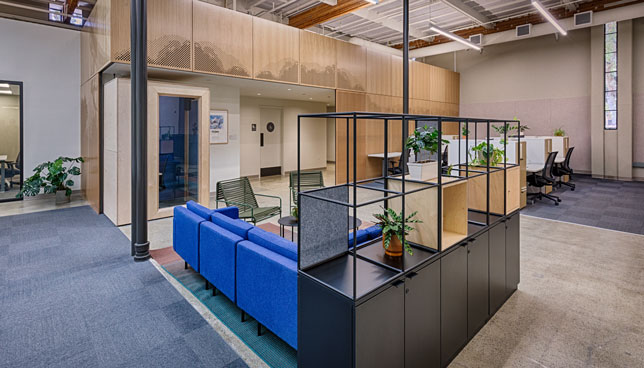 Doerr School of Sustainability Accelerator (Photo: Marco Zecchin, courtesy of CAW Architects)
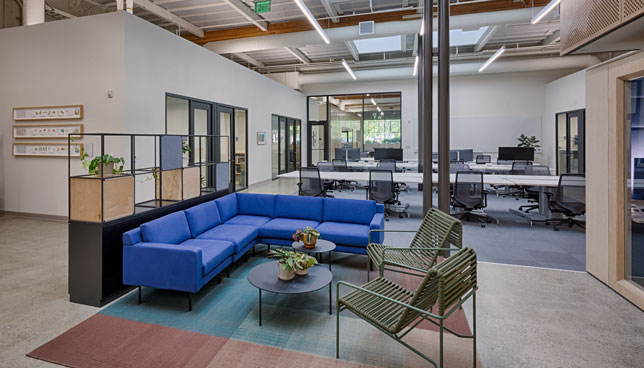 Doerr School of Sustainability Accelerator (Photo: Marco Zecchin, courtesy of CAW Architects)
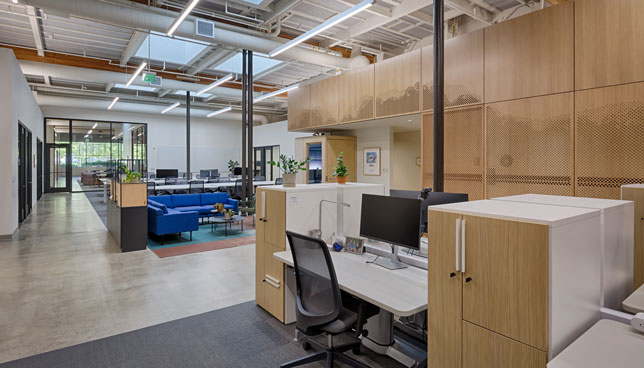 Doerr School of Sustainability Accelerator (Photo: Marco Zecchin, courtesy of CAW Architects)
Overcoming the "Concrete Box" Constraint
The primary design hurdle was the warehouse's inherent lack of transparency. To breathe life into the "engine room" of the project without triggering a carbon-heavy demolition or costly seismic upgrades, the design team introduced large north-facing skylights. By orienting these to the north, the team flooded the building's core with diffused, indirect sunlight. This strategy eliminated glare and heat gain while transforming the back of the warehouse from a dark corner into a bright, high-energy destination.
Transparency and the Theater of Innovation
To balance the need for high-stakes meetings with day-to-day research, the design utilizes a strategy borrowed from theater design, categorizing spaces as either Front of House or Back of House. The Front of House acts as a hospitality-focused "living room," scaling down the grandeur of the university to a human level to make connecting with external partners more accessible. Meanwhile, the Back of House serves as the dedicated engine for faculty and program teams.
Rather than walling these worlds off from one another, CAW utilized a glassy separation. This visual permeability ensures that while acoustic and security boundaries remain intact, a guest entering the lobby can see straight through to the active collaboration happening within, fostering a sense of shared energy and transparency.
Purposeful Decoration and Regional Identity
Every design choice in the Accelerator serves multiple masters, a hallmark of CAW's long-standing relationship with Stanford. A prime example of this efficiency is the custom perforated wood walls found throughout the facility. These panels are not merely decorative; they function as acoustic dampeners for the large open spaces and provide varying degrees of visual privacy. Furthermore, the perforations themselves tell a story, with patterns abstracted from Stanford-affiliated research sites, such as the kelp forests at Hopkins Marine Station and the rolling hills surrounding the iconic Stanford Dish.
A Model for Adaptive Reuse
In an era where the building industry is a major contributor to global emissions, the Accelerator project stands as a testament to the idea that the greenest building is the one already standing. The warehouse typology proved ideal for adaptation, providing a sturdy shell that the team optimized for the modern era.
Beyond the structural reuse, CAW significantly improved the building's operational footprint. The team increased roof insulation to R-46, treated existing windows with low-E film, and converted the HVAC system from gas to electric power. By tapping into the campus hot water loop for energy recovery, the project ensures that the space is as sustainable as the research being conducted within its walls. Today, the warehouse is no longer a remnant of the past but a high-performance catalyst for the future of the planet.
About the Author
CAW Architects is a California-based architecture firm specializing in sustainable, high-quality design.