Career Readiness Starts in Elementary School, and the Learning Environment Matters
If we want graduates who can collaborate, solve problems and navigate real-world experiences, we must give students opportunities to develop those skills from their earliest years in school.
- By Brittany Gonser
- 11/09/26
When educators talk about career readiness, the conversation often begins in high school. We discuss internships, industry credentials, dual-credit courses, career and technical education programs, and partnerships with employers.
Those opportunities matter, but preparing students for life after graduation cannot begin during their junior or senior year.
In Shawnee Mission School District, our goal is for every student to graduate with a market value asset. This could include an internship, an industry-recognized credential, college credit, an entrepreneurial experience or a client-connected project. While students typically earn these experiences in high school, the skills that make them possible begin developing much earlier.
If we want graduates who can communicate, collaborate, manage projects and solve unfamiliar problems, we must give them opportunities to practice those skills from the beginning of their education. Career readiness should influence not only what we teach, but also how we design the places where students learn.
The Space Communicates What We Value
A learning environment sends students a message before a teacher begins the lesson.
A classroom composed entirely of forward-facing desks suggests that learning happens primarily by listening to the person at the front of the room. A space with areas for gathering, making, discussing, focusing and presenting communicates something different. It tells students that learning can take multiple forms and that they have an active role in the process.
This does not mean direct instruction no longer has a place. Students still need explicit teaching, quiet concentration and clear routines. The goal is to create environments that support those needs while also making collaboration, exploration and student choice easier to integrate.
When a district identifies communication, problem-solving and adaptability as priorities, its learning environments should give students regular opportunities to practice them.
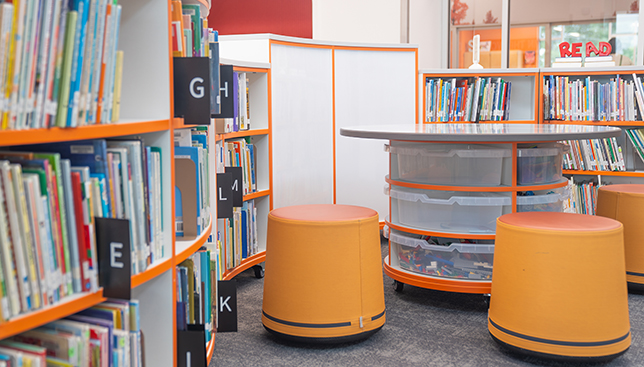 Photo courtesy of Shawnee Mission School District
Make Collaboration Part of the School Day
Many schools include collaboration areas, but the presence of a shared space does not guarantee that it will become part of instruction.
Teachers are more likely to use these spaces when the transition is simple. If they must move furniture, find a cart and carry supplies across the building, even a beautiful collaboration area can remain empty.
At the new Tomahawk Elementary School, we approached collaboration as a connection between spaces rather than a separate destination. Classrooms open to nearby shared learning areas that are furnished and ready for use. Teachers can move a small group outside the classroom and begin working without losing valuable instructional time.
The building’s semicircular layout also draws people toward a central gathering area. Learning spaces do not feel like isolated islands. Instead, the design makes collaboration visible as part of the school’s daily culture.
For students, moving between whole-group instruction, small-group projects and independent learning builds adaptability and self-management. These skills will become increasingly important as students progress into secondary school, postsecondary education and the workplace.
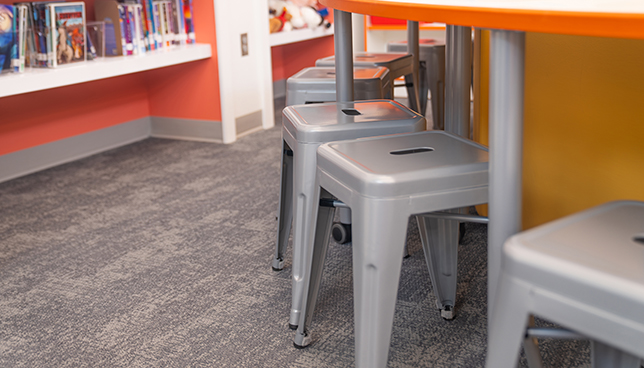 Photo courtesy of Shawnee Mission School District
Flexibility Must Be Practical
Flexibility is a common goal in school design, but it must work during an actual school day.
Furniture is not truly flexible if it is too heavy for a teacher to move or if changing the room requires assistance from the facilities team. A classroom will usually remain in the arrangement that is easiest to maintain, regardless of the original design intent.
During the planning process for Tomahawk, teachers participated in a furniture demonstration day. They tested samples, moved pieces and shared what they would realistically use. Their feedback helped us distinguish between furniture that looked flexible and furniture that could support quick transitions during instruction.
Teachers also reconsidered the amount of space devoted to traditional teacher desks. Many preferred smaller, multipurpose surfaces that could support their own work and also be used with students.
The lesson for other districts is simple: involve educators before final selections are made. Teachers understand the pace of the school day and the difference between a feature that is appealing in theory and one that will improve instruction.
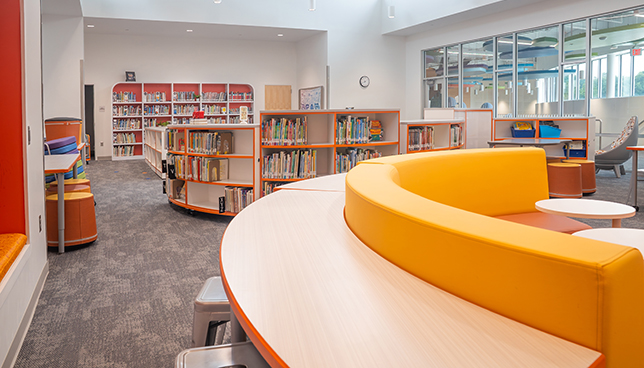 Photo courtesy of Shawnee Mission School District
Design for Independence and Authentic Work
One of the most important career-readiness skills students can develop is the ability to work without constant adult direction.
Learning environments can help build that independence gradually. When students understand where materials belong, how different areas are used and how to move furniture safely, they can take greater responsibility for preparing and resetting their environment.
At Tomahawk, connected art and STEM spaces can operate separately or open into a larger makerspace. They also connect to an outdoor learning area. This allows art, engineering, design and experimentation to overlap rather than being treated as isolated subjects.
A student might sketch an idea, build a prototype, test it, revise the design and explain the solution to classmates. That process develops creativity, communication, critical thinking and persistence. These are foundational workplace skills, even though the student may not participate in a formal career pathway for several more years.
Career readiness in elementary school is not about asking children to choose an occupation. It is about helping them recognize their interests, connect learning to the world around them and gain confidence in solving problems without one predetermined answer.
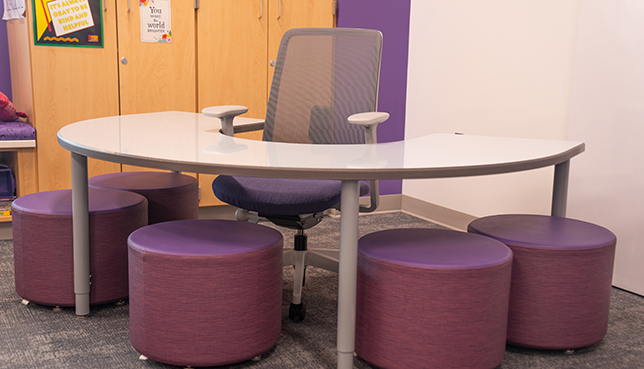 Photo courtesy of Shawnee Mission School District
Connect Elementary Design to Long-Term Goals
School buildings will serve students for decades, and many of the careers today’s elementary students may pursue do not yet exist. We cannot design a school around one prediction of the future.
We can design for the durable skills students will need in almost any future. They will need to communicate, work with people whose experiences differ from their own, manage time, respond to feedback and adapt when a plan does not work.
Preparing students to graduate with meaningful experiences and recognized skills begins long before they earn a credential or walk into an internship. It begins in elementary classrooms, libraries, makerspaces, outdoor areas and shared learning environments where students first learn how to participate in a team, make choices and turn an idea into something real.
If career readiness is truly a districtwide goal, it should be visible throughout the entire educational experience, including the spaces we create for our youngest learners.