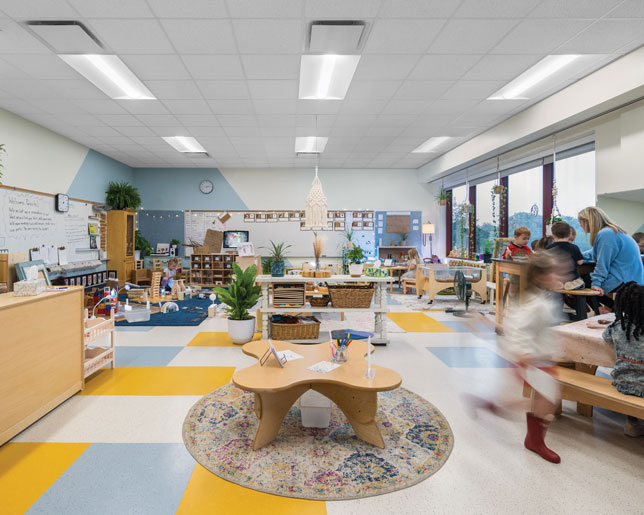
 Barbara Vick Western Branch
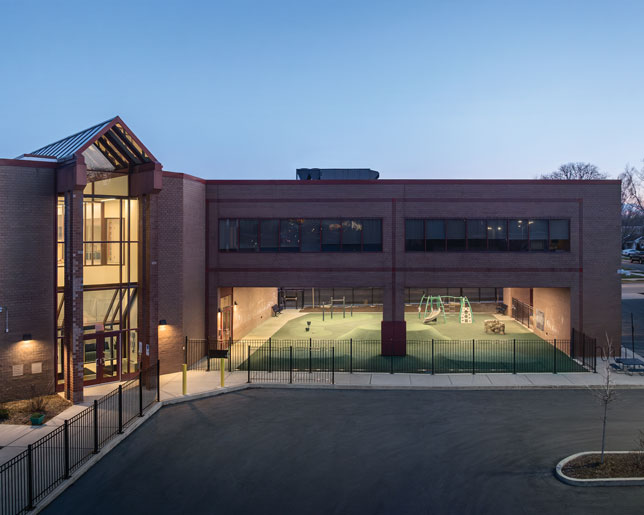 Barbara Vick Western Branch
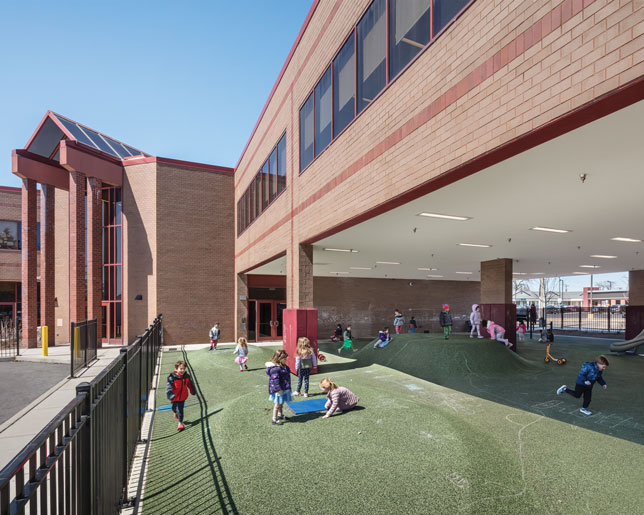 Barbara Vick Western Branch
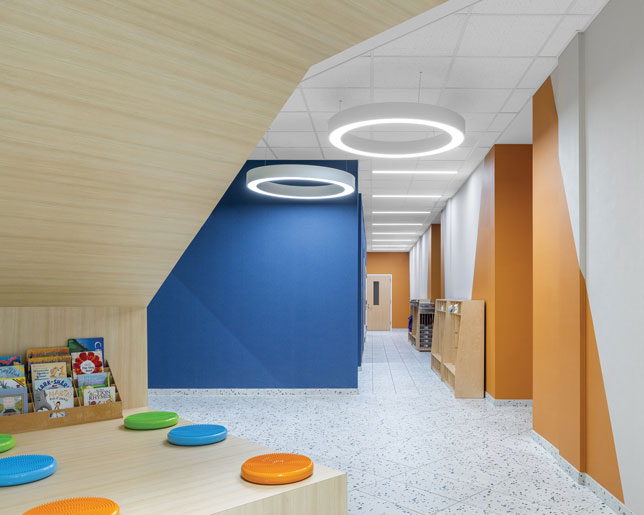 Barbara Vick Western Branch
 Barbara Vick Western Branch
 Barbara Vick Western Branch
 Barbara Vick Western Branch
 Barbara Vick Western Branch
Project Information
Project Type: Renovation
Category: Whole Building / Campus Design
Location: Illinois
District/Inst.: Chicago Public Schools
Chief Administrator: Amy O'Connor, Principal
Completion Date: 05/01/2024
Gross Area: 28,700 sq. ft
Area Per Student: 191 sq. ft
Site Size: n/a
Current Enrollment: 466
Capacity: 150
Cost per Student: $65,333
Cost per Sq. Ft.: $341
Total Cost: $9,900,000
Goals and Visions
The Beverly Neighborhood was identified by Chicago Public Schools as a growing area in need of more early education opportunities. The architect was originally contracted with the Chicago Public Schools to perform test fits at three locations to determine the best fit for the new home of a satellite PreK program. After identifying the oversized bank/office building that would be the new home of the Barbara Vick Western Branch, Chicago Public Schools sought to include network administration offices in the same facility. The design would need to accommodate both user groups while providing for the safety and security of the school.
Meeting Educational Need/Program
Early education programs were in high demand in Chicago’s South Side. “We have been bursting at the seams for years,” Principal Amy O’Conner told the Beverly Review, a local news outlet. “Any space we have, we’ve turned over into classrooms. We’ve built walls to separate rooms to build more classrooms. We did a third shift for a long time, where we had kids in the building until 6 p.m.”
The Barbara Vick Early Childhood and Family Center embraces a play-based, Reggio-Emilia-inspired curriculum addressing all aspects of the children’s development with the support of highly qualified Early Childhood Education. By nurturing curiosity, engagement, and joy, children learn to live fully, joyfully, and ultimately, become self-motivated problem solvers with an abiding curiosity about the world. As a Reggio-Emilia-inspired school, the Barbar Vick Western Branch strives to build a sense of community, encourage exploration, and develop collaboration skills among its young learners. In the carefully-designed learning environment, students should feel comfortable expressing themselves as they construct their own understanding and knowledge of the world around them.
The school’s design fully supports a Reggio-Emilia inspired curriculum, providing large, inviting spaces for students to explore on their own or collaborate with others as they develop their knowledge about the world around them. The design builds confidence in young people by encouraging daily movement, collaboration, and exploration through easy to navigate spaces.
Site Considerations
Chicago Public Schools identified three potential sites as the home for the new Barbara Vick Center: a grocery store, a bank building, and a commercial space. The architect visited each potential site with the client to assess their suitability.
Along with considerations for appropriately sized classrooms, the architect considered factors such as student drop off, security, and building condition / renovation requirements before making recommendations.
To ensure the new school would provide opportunity for students who need it most, the test fit process considered the distance of each site from existing schools and parks, which often have early education programming. By selecting a site furthest from existing parks and schools, the new facility could provide a more convenient option than existing programs.
Ultimately, the site located at 99th and Western was selected. Its ample size would provide plentiful space for additional classrooms as the program continued to grow. By building a new early education school in the Beverly Neighborhood, more students can learn close to where they live. The Barbara Vick Western Branch fills an empty storefront, creating a more lively commercial district. And as families incorporate pick up and drop off into their daily commutes, they will be able to easily access the stores and services already in their community.
Planning Process
Prior to the opening of this school, the district’s pre-kindergarten programs were limited and the district did not have a prototype for classrooms. During the test fit process, the architect worked hand-in-hand to develop a classroom module with all the elements necessary for a successful early education learning environment. This module would be the basis to determine if the proper space could be allocated in the selected buildings.
During the test fit process, Chicago Public Schools identified a need to create additional Network Administrative Offices with training areas. This site could provide the necessary office, training, and break areas for the district accessible via a separate entrance, a requirement for student safety.
Special Challenges & Solutions
By using an existing bank/office facility, designers transformed challenges into unique opportunities. Key architectural elements including the bright atrium offer plentiful day light into the space. What was previously the drive-through bank teller became a covered outdoor play area, allowing children to play and explore rain-or-shine. However, the existing interiors felt dated and corporate, requiring a complete interior renovation.
Unique Features / Innovations
Every aspect of the design reflects the school’s value of creating a positive sense of belonging, encouraging flexible interaction.
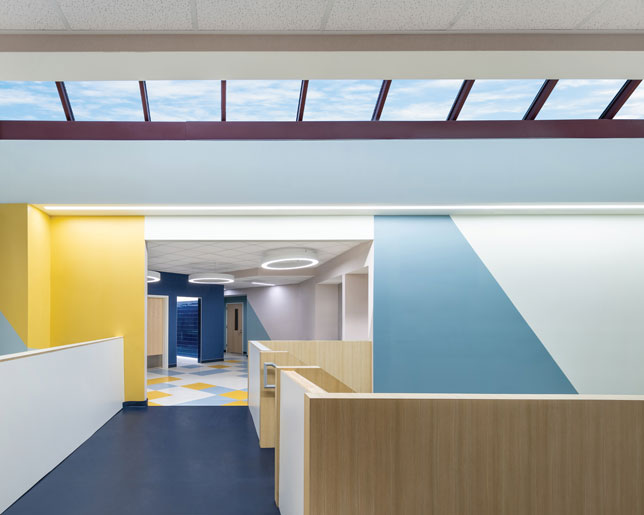
The building’s unique shape and features offered many benefits for an early education facility. Daylighting from the large storefront windows and atrium would become a wellbeing asset for students and teachers alike. The drive-through area could be converted into a covered playspace for outdoor exploration rain or shine.
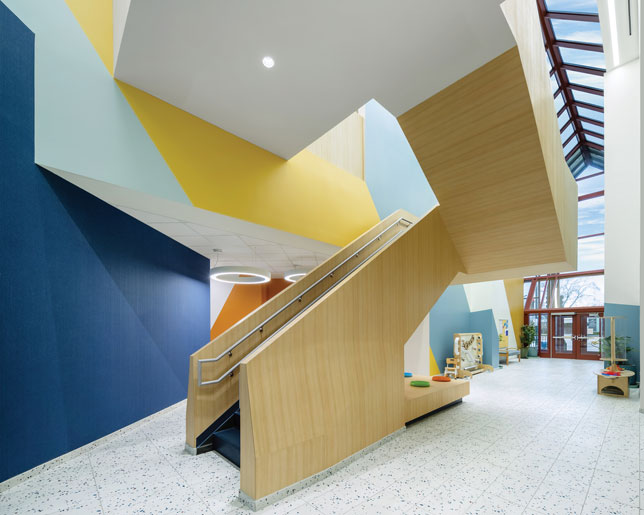
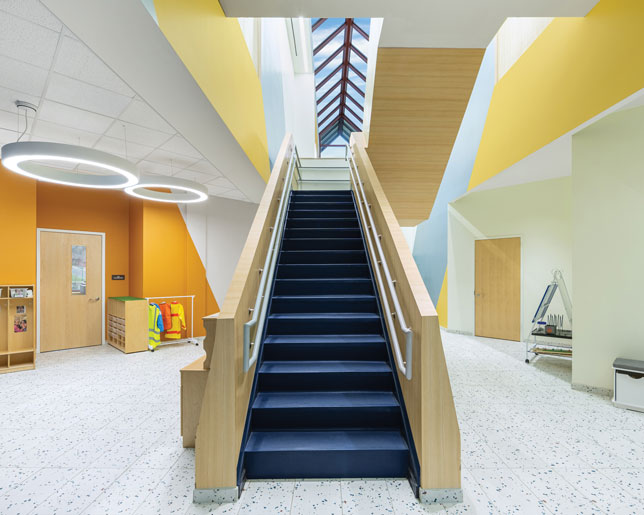
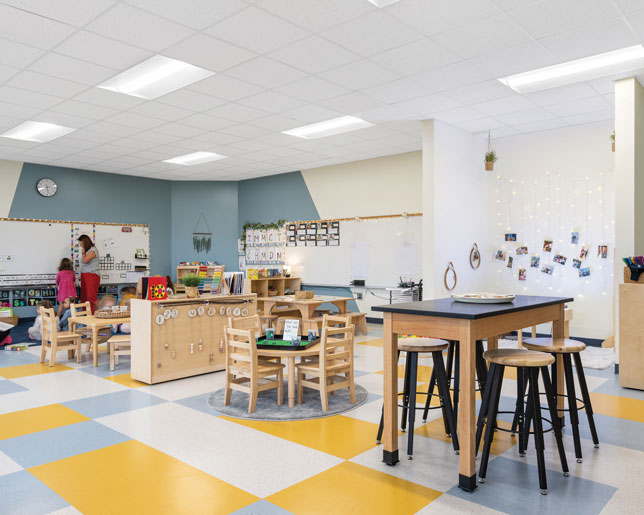
In both the classrooms and circulation spaces, design details provide spaces for students and staff to find solitude or interact with others. Each classroom includes quiet nooks for children to explore or plan individually or in small groups. The open stair provides internal circulation within the school while providing a security separation from the network offices. Below the stair, a comfortable bench provides space for students to meet and gather.
The design of the Barbara Vick Western Branch gives special consideration to accessibility for people of all ages and backgrounds, whether students, staff, or visitors. As part of the building’s renovation for adaptive reuse, new accessible routes from the parking lot were established.
For both educators and Network Administration staff, a mother's room, break rooms, multi-purpose spaces, and breakout spaces create engaging and diverse spaces whether an individual is seeking solitude for prayer and reflection or community for collaboration and inspiration.
Safety and Security Considerations
Students, staff, network administrators, and visitors all come into the building through the atrium. A welcome desk with a clear line of sight to the entrance helps to direct people to their destination. With both a workplace and a PreK school in the same facility, special care was taken to ensure the day-to-day interactions of each do not cross, with secure access between the work and school spaces.
Sustainability / Environmental Considerations
By reusing the existing building, the design team transformed the empty space into a vibrant community asset, thus eliminating the need and environmental cost of new construction.
The existing atrium is showcased in the new design, providing daylight to the common areas on both floors to connect students, faculty, and staff with the outside environment and improve wellbeing. The prominence of the open stair in the middle of the school encourages its use over an elevator.
Movement and play are further encouraged by the covered outdoor playspace allowing for rain-or-shine activity. On days when going outside is not an option, the second floor boasts a large, multi-purpose room for indoor physical activity options and gatherings.
Each classroom takes advantage of the large windows already part of the existing building. This brings much-needed natural light into each classroom and brings exterior views in.
New landscaping and added plantings and trees on site are mutually beneficial to people and the planet. A new, reflective roof minimizes the building’s solar heat gain. All new mechanical systems, efficient plumbing features, and LED lighting further improve the building’s environmental impact.
New, efficient HVAC systems and lighting conserve energy. In each of the following categories, we see the following improvements from code / baseline: Interior Lighting: 56%; Exterior Lighting: 51%; Mechanical Heating: 21%; Mechanical Cooling: 32%; Boilers: 20%.
Materials Choices
Energetic colors expressed as dynamic shapes on the walls create unexpected patterns, enlivening the space for a more delightful experience. The design emphasizes the building’s large, original windows and atrium to maximize daylight views, connecting students and staff with the outdoors and catalyzing curiosity about the world beyond.
To create moments of joy, wonder, and delight withing the client’s standards set to ensure equity amongst their 646 schools, the design firm incorporated best practices and research developed by the firm’s internal Environmental Stewardship and PreK-12 education group. Led by a WELL accredited designer, the Environmental Stewardship group focuses on ways to create spaces mindful of people, places, and the planet, considering both sustainability and wellbeing. The design firm confirmed the school’s standards matched the best practices developed by our internal team by adhering to Red List-free building materials. These finishes and materials were then used in unexpected ways within the building to transform the once-cold commercial environment into a bright, joyful, and ultimately, welcoming school.
Cost-Effectiveness
Conceptualized in 2021, the original project budget was $6.7 million. Due to project delays, rising construction costs during the COVID-19 outbreak, and the scope change to include network administration offices, the final construction cost of the project came in at $12.2 million
Project Delivery Method
This project was delivered via Design-Bid-Build
Architect(s):
Bailey Edward Design, Inc.