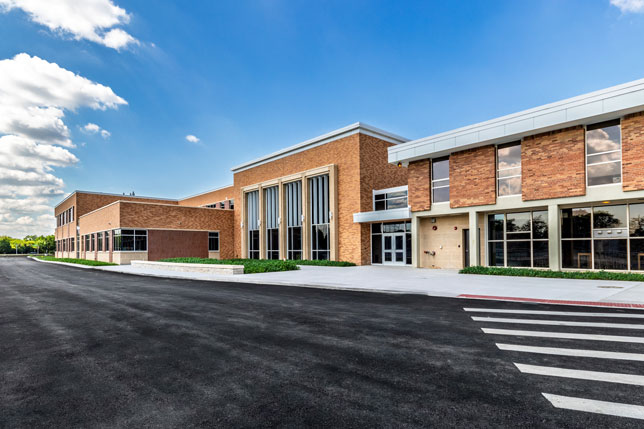
 Homewood-Flossmoor High School NetZero Addition
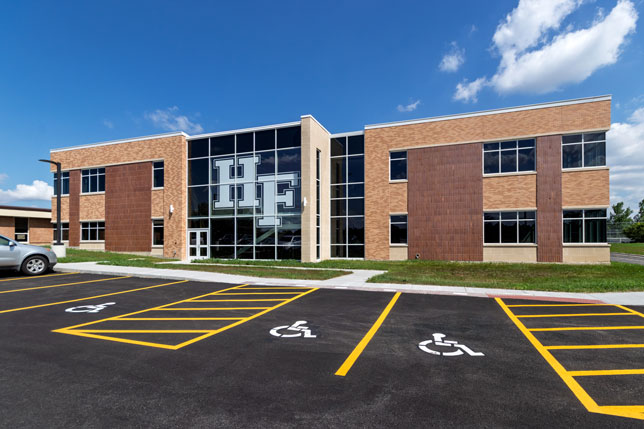 Homewood-Flossmoor High School NetZero Addition
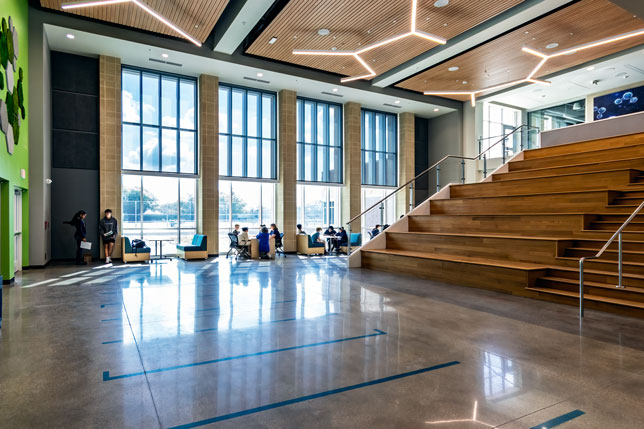 Homewood-Flossmoor High School NetZero Addition
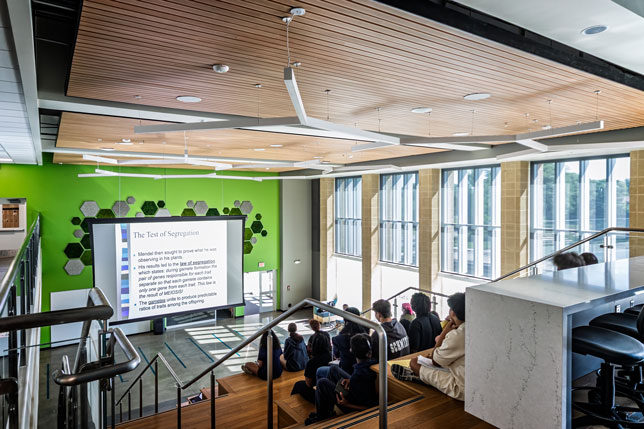 Homewood-Flossmoor High School NetZero Addition
 Homewood-Flossmoor High School NetZero Addition
 Homewood-Flossmoor High School NetZero Addition
 Homewood-Flossmoor High School NetZero Addition
 Homewood-Flossmoor High School NetZero Addition
 Homewood-Flossmoor High School NetZero Addition
 Homewood-Flossmoor High School NetZero Addition
Project Information
Facility Use: K-12 Institution
Project Type: New Construction
Category: Whole Building / Campus Design
Location: Illinois
District/Inst.: Homewood-Flossmoor Community High School District 233
Chief Administrator: Dr. Jennifer Norell, Superintendent
Completion Date: 04/01/2025
Gross Area: 43,700 sq. ft
Area Per Student: 91 sq. ft
Site Size: 100 acres
Current Enrollment: 2,900
Capacity: 480
Cost per Student: $51,063
Cost per Sq. Ft.: $561
Total Cost: $24,510,000
The Science Addition is a dynamic, hands-on learning tool that prepares students for a complex, technology-driven future while championing sustainability. The facility is pursuing Zero Energy Certification from the International Living Future Institute (ILFI), a rigorous standard signifying that it produces as much energy as it consumes annually. This ambitious goal shapes every aspect of its design, creating a space where architecture and curriculum are seamlessly integrated.
Goals and Vision for the Project
The vision for the Net Zero Science Addition was ambitious from the start: to create a national model for sustainable, future-ready learning. The district aimed to move beyond simply building new classrooms; they envisioned a space that would actively inspire curiosity, foster interdisciplinary collaboration, and empower students to become leaders in ecological stewardship.
The primary goals were:
- Achieve Zero Energy Certification: To design and construct a facility that generates 100% of its energy needs through renewable sources, minimizing its environmental footprint and serving as a tangible example of sustainable practice.
- Advance STEM Education: To provide state-of-the-art laboratory environments that support Next Generation Science Standards (NGSS) and facilitate hands-on, inquiry-based learning.
- Create a Living Laboratory: To transform the building itself into an interactive teaching tool, where students can observe, measure, and understand the sustainable systems that power their school.
- Promote Equity and Access: To design inclusive, flexible spaces that accommodate diverse learning styles and provide all students with access to cutting-edge technology and resources.
- Enhance Student and Staff Wellness: To integrate biophilic design principles that connect occupants with nature, improving mental and physical well-being.
Meeting Educational Need/Program
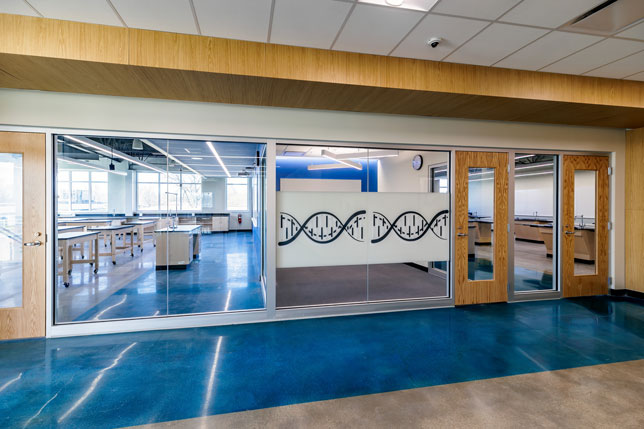
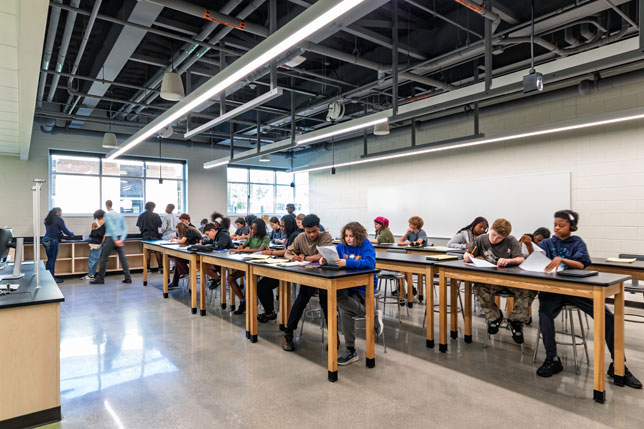
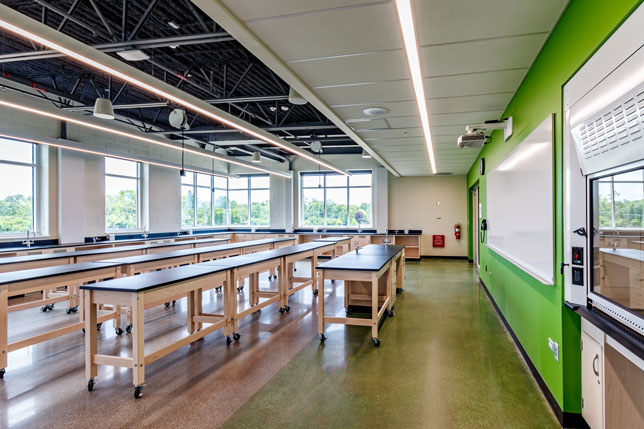
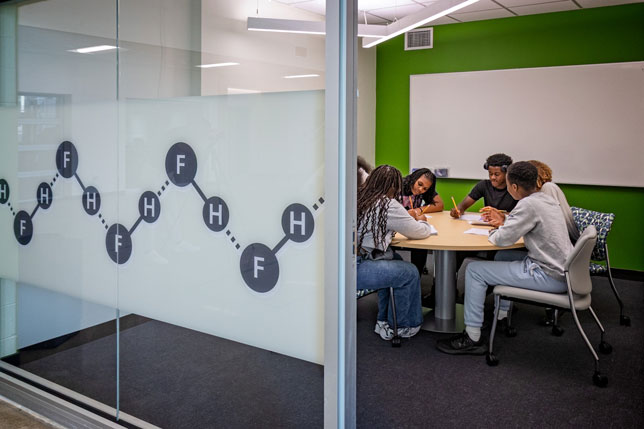
A decade of planning laid the groundwork for this transformative project. The district’s existing science facilities were outdated and unable to support a modern, hands-on curriculum aligned with NGSS. The new addition directly addresses these needs with thirteen advanced Science Labs, each with adjoining Prep Rooms and Break-Out Rooms, as well as a central Chemical Lab on the second floor.
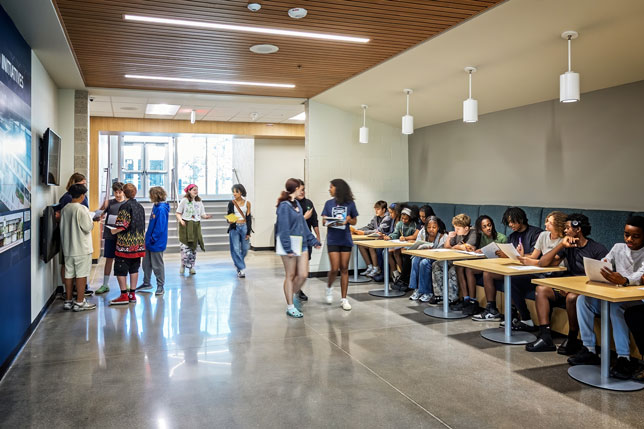
Beyond the labs, the addition introduces several key spaces that enrich the educational program. A central Learning Commons acts as the vibrant heart of the building, offering a dynamic environment for individual study, group projects, and informal learning. Adjacent to it, a Maker Space and a College Engineering Lab provide students with the tools and technology to engage in robotics, prototyping, and other applied engineering disciplines. These spaces foster an interdisciplinary culture, encouraging students from different fields to collaborate on complex, real-world problems.
The Planning Process
The planning process was deeply collaborative, reflecting our belief that the best spaces are co-created with the communities they serve. We engaged in extensive visioning sessions with District 233 administrators, educators, and students. We rolled up our sleeves and listened, learning about the curriculum, the school’s culture, and the aspirations they held for their students.
This collaborative approach ensured that the design was not only innovative but also deeply rooted in the school’s educational mission. Teachers provided invaluable input on lab layouts and adjacencies, ensuring the spaces would support their instructional methods. Students shared their ideas for collaborative zones and social areas. The process was iterative, with feedback loops that allowed us to refine the design to meet the specific needs of Homewood-Flossmoor’s learning community. The district’s commitment to achieving Zero Energy status was a guiding principle from day one, influencing every decision from building orientation to material selection.
Special Challenges and Solutions
The most significant challenge was achieving Zero Energy certification within a public school budget and timeline. This required a creative, integrated approach to design and engineering. We assembled a team of experts in high-performance building systems to tackle this goal.
One major hurdle was seamlessly integrating a large, modern addition with the existing campus infrastructure. Our solution was to create a design that respected the scale and materials of the original school while establishing its own distinct, forward-looking identity. The central Learning Commons serves as a beautiful and functional bridge between the new and existing structures, fostering a sense of campus unity.
Another challenge was designing mechanical systems that were both highly efficient and served as educational opportunities. Instead of hiding the building’s infrastructure, we chose to expose and celebrate it. An interactive display zone educates students and the community on the building’s use of photovoltaics and geothermal energy. This exhibit highlights the benefits of these strategies and demonstrates the pathway to achieving Net Zero energy.
Unique Features and Innovations
The Net Zero Science Addition is filled with features designed to inspire and educate. Its most defining innovation is its status as a living laboratory. Throughout the building, interactive learning exhibits and real-time energy dashboards allow students to track the facility’s energy production and consumption. They can see how much power the rooftop solar array is generating or monitor the efficiency of the geothermal system, connecting abstract scientific concepts to their immediate environment.
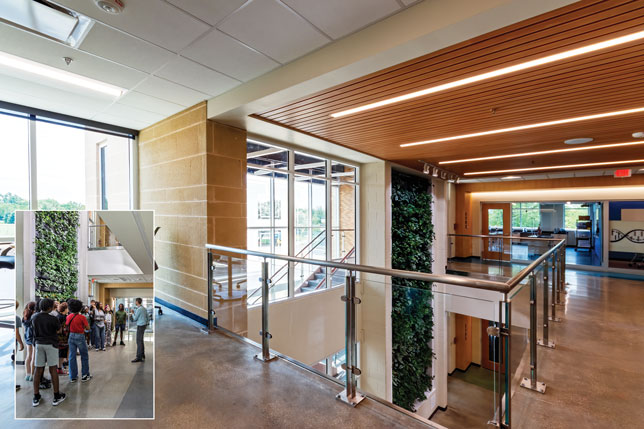
Biophilic design is another key innovation. The building’s connection to nature is emphasized through expansive views, abundant natural daylight, and the use of natural materials. Educational display discussing the innate human instinct to connect with nature and other living things, the educational, emotional, and social benefits of those strategies, and how they are incorporated into the building. An outdoor amphitheater and native plant gardens extend the learning environment beyond the building’s walls, providing spaces for outdoor classes, ecological studies, and quiet reflection.
Inside, flexibility is paramount. Operable partitions, mobile furniture, and integrated technology allow spaces to be easily reconfigured to support a variety of learning activities, from large-group lectures to small-group collaboration.
Safety and Security Considerations
The safety of students and staff was a top priority. The design incorporates modern security principles, including clear sightlines, controlled access points, and integration with the campus-wide security system. The layout naturally funnels visitors through the main office, ensuring all guests are properly registered. Within the labs, safety is enhanced through durable, chemical-resistant surfaces, proper ventilation systems, and strategically placed safety equipment like eyewash stations and emergency showers.
Sustainability and Environmental Considerations
Sustainability is the core principle of this project. The pursuit of ILFI Zero Energy Certification drove every design decision. The facility’s energy-efficient envelope minimizes energy loss through double-thermally broken curtain walls, solar fins, high-performance glazing, and superior insulation, achieving an R-13.7 wall and R-40 roof insulation rating. The rooftop solar array is designed to generate 308.9 MWh of clean, renewable energy on-site each year.
A high-efficiency, one-pipe geothermal water system leverages the earth’s stable underground temperature for heating and cooling, while dedicated outdoor air units recover energy from exhaust air to precondition fresh air. These systems dramatically reduce the building’s reliance on fossil fuels. Water-efficient fixtures, native landscaping that requires no irrigation, and the use of recycled and locally sourced materials further minimize the project’s environmental impact. This holistic approach makes the addition a powerful model of responsible design.
Materials Choices
Material selection was guided by performance, durability, sustainability, and aesthetic. We prioritized materials with high-recycled content and low volatile organic compounds (VOCs) to ensure a healthy indoor environment. Polished concrete floors provide a durable, low-maintenance finish, while wood accents add warmth and a connection to nature. In the science labs, specialized countertops and finishes were chosen for their resistance to chemicals and their longevity, ensuring the spaces will stand up to the rigors of daily use for decades to come.
Site Considerations
The project’s location on the campus was strategically chosen to create a new, welcoming face for the school and to optimize solar energy generation. The building is oriented along an east-west axis to maximize southern exposure for the rooftop solar array. The surrounding landscape was thoughtfully designed to manage stormwater and create outdoor learning opportunities. The native gardens and bioswales not only enhance the site’s ecology but also serve as educational tools for students studying local ecosystems.
Cost-Effectiveness
The design team maintained a cost per square foot within the high-end average for specialized lab facilities in the project’s metropolitan area. From the outset, the client acknowledged a common misconception that net-zero energy buildings are prohibitively complex and expensive, achievable only for small structures with low loads. To challenge this perspective, the client wanted to demonstrate the viability of net-zero design to the future engineers and builders within their own student body.
By achieving net-zero energy in a large facility for science and engineering education, Homewood-Flossmoor High School established itself as a leader, teaching sustainability through real-world application. The Science Addition will dramatically reduce the district’s utility costs over the building’s life by generating its own energy. Furthermore, the district secured over $2.1 million in Clean Energy Grants from state and local utilities for its sustainable efforts. These annual energy savings, combined with the use of durable, low-maintenance materials, provide a strong return on investment and minimize operational costs. This fiscally responsible approach ensures district resources can be directed back to students and programs.
Project Delivery Method
The Design-Bid-Build delivery method was used for this project. This traditional method allowed for a competitive bidding process and ensured transparency in cost and quality.
Architect(s):
DLA Architects