New Pre-K Center 613 Completed in Brooklyn

Pre-K Center 613 is a new three-story school in a dense urban block surrounded by residential buildings, developed by the New York City School Construction Authority and designed by MDSzerbaty Associates Architecture as part of the NYC Mayor’s “Pre-K-For-All” initiative.
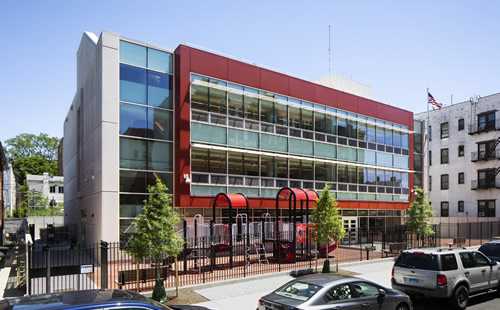
Pre-K Center

The school provides 14 classrooms for 252 students and includes an indoor play room, administration offices, and a clerestory-lit multi-purpose room at the cellar level. To shorten the construction duration, a reinforced concrete frame with architectural insulated precast wall panels were chosen for their ability to be rapidly constructed and erected.

Featured

  • concentric silhouettes of a human head

    How Physical Space Shapes the Mind: Designing for Better Learning Outcomes

    Research in environmental psychology and neuroscience increasingly suggests that the way a room is designed can influence memory, focus, or even a student's sense of belonging.

  • Indiana Wesleyan University Schedules Grand Opening for New Welcome Center

    Indiana Wesleyan University recently announced that it will soon open a new Welcome Center on its campus in Marion, Ind., according to a news release. The facility will serve as the home base for prospective students and their families to learn more about the university and student life there. A ribbon-cutting ceremony is scheduled for February 19.

  • UCNJ Launches $30M Modernization of Physical Education Center

    The Union College of Union County (UCNJ) in Cranford, N.J., recently broke ground on a new $30-million modernization project for its Physical Education Center (PECK), according to a news release. The college partnered with DIGroup Architecture for the project’s design, transitioning the existing 42,000-square-foot structure into a campus hub for student athletics and campus life.

  • Different Starting Points, Same End Goal

    Higher education campuses can enhance student experience by implementing mobile credentials to streamline building access, on-campus payments, and access to other amenities. This enables students to connect to their campuses through the technology they use most: their mobile devices.

Digital Edition