Funding Provided for Arts Facility at Arkansas State University

Arkansas State University in Jonesboro (ASU) recently announced that the Windgate Foundation is to offer a $6.7 million grant to build a new facility for sculpture and ceramics programs at ASU, the largest single gift to an arts program in ASU’s history.
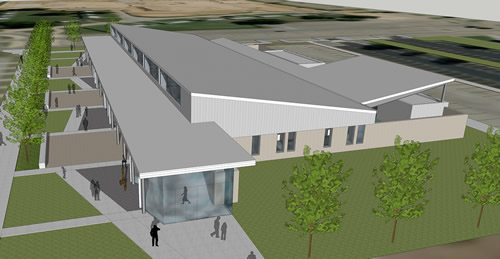
Arkansas State University Windgate Center for Three-Dimensional Arts

The proposal will fund the construction of a new facility—the Windgate Center for Three-Dimensional Arts—with studio and exhibition space for sculpture and ceramics, often referenced in the art world as the 3D arts. The new facility's studio and work areas are expected to cover approximately 20,000 square feet, almost four times the space available in ASU's Fine Arts Annex.

Featured

  • Spaces4Learning Trends & Predictions for Educational Facilities in 2026: Part I

    We asked, you answered, and the results are in! Last year, we put out a call for submissions to collect our readership’s opinion on trends and predictions for K–12 and higher education facilities in 2026.

  • Houston K–12 District Opens New Elementary School

    The Lamar Consolidated Independent School District (Lamar CISD) recently announced the completion of a new elementary school in a western suburb of Houston, Texas, according to a news release. Haygood Elementary School measures in at 110,000 square feet, has the capacity for 854 students, and is the first of three new schools scheduled to be built in the Cross Creek West community.

  • University of Arizona Approves New Residence Hall

    The Arizona Board of Regents recently approved plans for a new residence hall at the University of Arizona in Tucson, Ariz., according to a news release. The new facility is scheduled to open in fall 2028 and have the capacity for more than 1,200 students, enforcing a new university expectation that all first-year students live on campus.

  • Pitzer College

    Designing for Change in Higher Ed Learning Environments

    Higher education will continue to evolve, and learning environments must evolve with it. By prioritizing adaptable infrastructure, thoughtful reuse, strong energy performance, and wellness-centered design, campuses can create spaces that support learning today while remaining flexible for the future.