University of Hawai’i Law School Dedicates New $9.3M Clinical Building

HONOLULU, HI – The William S. Richardson School of Law at the University of Hawaiʻi at Mānoa (UH Mānoa) dedicated its new clinical building on September 6. The celebration capped a 15-year quest to provide an essential space for practical training for law students while simultaneously serving members of the community in need of access to justice.

The $9.3 million project—which included more than $2 million in philanthropic funds—was a combined effort of the law school, UH Mānoa administrators, donors, and the state Legislature.
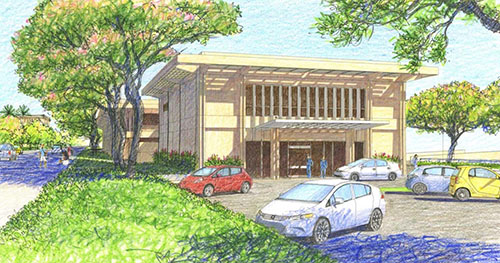
University of Hawai’i Law School 500

The building was built in a portion of the existing Law School parking lot, an area designated in 2008 for expansion in the UH Mānoa Long-Range Development Plan, and is attached to the current Law School building by a second-floor bridge.

The Law School has long needed additional space for its clinical programs that offer hands-on training for law students working with real clients. The Richardson programs are popular with students, and have been singled out nationally for their high quality and innovation.

Featured

  • Universities Continue to Launch Multimillion-Dollar Campus Transformations

    What makes the current wave of campus development especially noteworthy is its emphasis on multi-use functionality and community integration. Institutions are no longer investing solely in academic or athletic facilities in isolation. Instead, they are creating destinations that blend recreation, health, housing, and event-driven economic activity.

  • Houston-Area High School Breaks Ground on 117,000SF Multi-Use Facility

    North Shore Senior High School, part of Galena Park ISD in Houston, Texas, recently broke ground on a new multi-use facility for student extracurriculars, according to a news release. The North Shore Multi-Use Facility will include dedicated practice and training space for the school’s athletics and fine arts programs.

  • Spaces4Learning Trends & Predictions for Educational Facilities in 2026: Part II

    As education leaders look toward 2026, the design of K–12 and higher education facilities is being reshaped by powerful, converging forces. Survey respondents point to the rapid growth of Career and Technical Education, deeper alignment with workforce and industry needs, and the accelerating influence of AI and emerging technologies.

  • blurry image capturing students navigating crowded hallways between classes

    How Human Behavior Data Is Reshaping Campus Facilities Management

    The ebb and flow of students, faculty, and administrators across a campus have a larger impact on maintenance, cleaning, and sustainability than many realize.