Marshall Electronics, MXL Microphones Offer Remote Learning Tech
Marshall Electronics and MXL Microphones have recently reintroduced a line of user-friendly cameras and microphones for use in remote learning. Products like the Marshall CV503-U3 camera and the MXL AC-44 microphone offer relatively simple plug-and-play solutions to help improve faculty and students improve the audio and visual quality of their learning experiences.
The Marshall CV503-U3 camera uses drivers already built into most Mac, PC, laptop, and Linux devices. The device itself is software-agnostic and can integrate into any video conference, video capture, or streaming soft codecs. The microphone features a three-capsule design and a 180˚ pickup arc. Other USB products include the AC-404 and AC-360 microphones, as well as the CV610-UB HD PTZ camera.
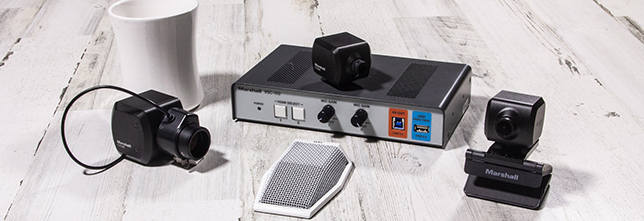
Photo credit: Marshall Electronics
“Poor video quality can appear unprofessional; to give your video presence a boost, look beyond factory-installed cameras and add a high-quality USB camera that is easy to install and use,” said Marshall Electronics Director of Cameras Tod Musgrave. “Also, don’t forget about audio quality, as great video quality with bad audio in an educational environment can be irritating to students. High-quality video and audio can easily be achieved with Marshall and MXL combo solutions.”
According to a press release, the products are ideal for use in educational settings ranging from elementary school to university, everywhere from classrooms to lecture halls to remote workstations. It also comments on the ease of use without AV experience.
“Over the past year, we have seen a massive surge in demand from our integrators and customers seeking AV support for digital classrooms,” said MXL Director Trevor Fedele. “With Marshall and MXL on your desk, you’ll feel like you’re right in the classroom with your students.”
About the Author
Matt Jones is senior editor of Spaces4Learning. He can be reached at [email protected].