Biometric recognition provides hardened school security
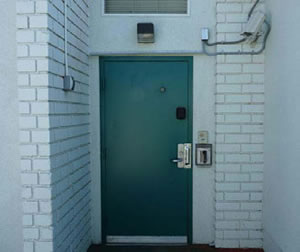
The FST21 SafeRise solution registers and identifies visitors at the door using a fusion of biometric recognition, face, behavioral and even license plate recognition protocols.
The recent, profoundly tragic events at Sandy Hook Elementary School in Newtown, Connecticut brought to light very sadly, and all too clearly, the urgent need for heightened access security in our schools. The Bais Yaakov School for Girls (“BYLA”), a high school in Los Angeles, has long been a proactive leader in this arena, and has taken some serious and ongoing steps to harden security at the school for years. Adam Cohen, a volunteer Facilities Manager for BYLA, initiated the effort as far back as 2003, when he oversaw the installation of seven doors with access keypads and electric door strikes.
In the summer of 2009, Cohen hardened school security even further when he had the FST21 SafeRise solution installed. “When I heard what FST21 was developing,” he recalls, “I said ‘I want it!” He went with FST21’s SafeRise solution, an In Motion Identification system that employs quick and highly secure identification. The system registers users and can identify anyone at the door and allow approved user access through a fusion of biometric recognition, face, behavioral, voice and even license plate recognition.
BYLA upgraded the system a few months ago to add an eighth door – an internal door to an office of the staff members. “We’ve customized who has access and at what times,” Cohen adds. “Staff, for example, has different access hours than students. Custodial staff has different hours than students, and if, for instance, there are extra-curricular activities going on after school hours, we can remotely update the access parameters for any group.”
The staff and students at BYLA adapted quickly and easily to the SafeRise solution, Cohen reports. It is always alert and active, creating a secure feeling for the students and the staff. It’s much more than an access control system, it gives you a feeling it is a system you can actually trust.”
www.fst21.com
This article originally appeared in the School Planning & Management October 2013 issue of Spaces4Learning.