P3: Selling the Value in Learning Spaces
- By John K. Ramsey
- 01/01/14
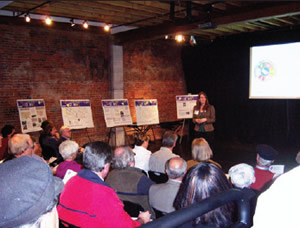
PHOTO COURTESY OF MONTGOMERY COUNTY PLANNING COMMISSION
Each year, as we examine the complexity and the ever-growing scarcity
of funding in what we call the “new normal” economic environment,
planners continue to put student need first, considering the
importance of incorporating learning styles in planning for 21st-century
educational environments. At CEFPI, we have noticed a trending
movement that encompasses selling the value of quality schools in a community that benefits not just the students who occupy the spaces,
but also the commercial entities that drive the local economy.
It’s no new phenomenon that quality schools serve as an economic
engine, driving successful commercial enterprise to locate to
a particular area. Nowadays, there has been noticeable increase in
private enterprise engaging in private/public/partnerships (P3) with
local school authorities and municipalities. We believe P3 will continue
to grow throughout North America at various levels, whether
it is through hospitality management schools, trade academies,
community colleges, medical schools, ACE/STEM programs and
more. Although these programs have been around for some time,
the recent surge in P3 interest from the members and constituents of
CEFPI corroborates the growth of this trend. CEFPI will be offering a
suite of sessions on P3-related issues in our upcoming webinars (free for
CEFPI members) and conferences.
In addition to recognizing the value in
our physical environments, safety issues
remain at the forefront of the conversation.
This past year, CEFPI hosted a summit in
Washington, D.C. that involved multifederal
and state agencies, and dozens of
stakeholders in the education and security
fields to recognize and address significant
issues impacting school safety and security.
The result of this work was the publication
of a best practices’ guide to brief school
boards, parent groups, media, elected officials, educators, planners, designers and
other publics regarding school security as
it relates to the physical environment. This
document is available, free of charge, on
our website, www.cefpi.org.
In the coming year, CEFPI will launch
a new program regarding resiliency in
the learning environment. We will host a
two-day conference in Scottsdale, AZ, Feb.
6 and 7, which will address not only hostile
threats, but will include tornado shelters,
earthquakes, indoor air quality, contingency
planning, continuity of operations and
leveraging funding for resiliency planning
and infrastructure. We believe that by leading
the effort to develop workable solutions
for all types of emergencies and disruptions,
we will provide an environment as safe as
possible for our children and our communities.
Expect to see more on this subject in
this publication in the near future.
This article originally appeared in the issue of .