The Guide
- By Kudret Utebay, Michele Curreri
- 02/01/15
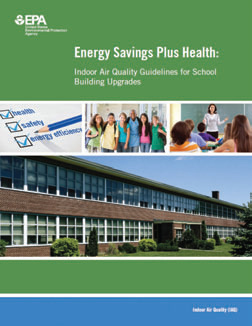 Building systems in nearly one third of permanent public school buildings are in fair or poor condition, according to a recent study conducted by the U.S. Department of Education. These findings highlight the need for moderate to significant building improvements in schools across the nation. A holistic approach to indoor environmental quality and energy management for each upgrade project can help you save time and money and improve student and staff health.
The U.S. Environmental Protection Agency’s (EPA) new “Energy Savings Plus Health: Indoor Air Quality (IAQ) Guidelines for School Building Upgrades Guide” (the Guide) is designed to navigate K-12 stakeholders through the retrofit process using a holistic approach that integrates indoor air quality protections into school energy efficiency retrofits without compromising occupant health.
The Guide includes 23 priority issues and related assessments and recommended actions; resources and tools for project planning and communications; and the customizable Energy Savings Plus Health Checklist Generator to guide the retrofit process.
Integrating energy efficiency and IAQ improvements — whether they involve building structure, equipment or ongoing maintenance — can streamline facility management and save time and money. The Guide can help school energy managers, facility managers and IAQ coordinators work together throughout the upgrade process, from the design phase through construction and occupancy. Failure to recognize the interaction between energy management and IAQ can negatively affect building efficiency and occupant health. For example, building upgrade activities can disturb hazardous materials, introduce new contaminants and result in inadequate ventilation in occupied spaces, if proper care is not taken.
Making the health case
A school’s indoor environment can have a significant impact on health and learning. Children, in particular, are more vulnerable to poor environmental conditions, and exposures to environmental contaminants early in life can cause adverse health impacts in children, many with implications well into adulthood.
Studies have demonstrated associations between IAQ and the health and performance of occupants in schools, underscoring the critical role that a school’s indoor environment plays in student achievement. Increased classroom ventilation rates are associated with improved student health and performance, and doubling the ventilation rate from 7.5 cubic feet per minute per person (cfm/person) to 15 cfm/person can improve academic performance by eight percent.
Making the business case
Well-conceived and coordinated school energy and IAQ management programs can save money and ensure the health and safety of children. The “Greening America’s Schools: Costs and Benefits” report reviewed 30 “green schools” and concluded that the financial benefits of building green schools are 20 times greater than the associated increase in cost.
The payoff from green schools is even greater when considering the costs associated with decreased health from poor IAQ. According to the Centers for Disease Control and Prevention, the economic cost of asthma totals more than $56 billion annually. A large percentage of these costs can be attributed to health care expenditures, lost school days and lost productivity. Using the Guide will help energy managers, school officials, construction coordinators and others avoid these health problems at the schools they serve.
IAQ plays a critical role in the health, attendance and academic performance of students and staff. The Guide provides a strategy for prioritizing energy efficiency and IAQ protection goals through a customized, advantageous and holistic approach. School districts can use this guide to realize the benefits of improved student and staff health and reduced operational costs.
This article originally appeared in the issue of .
About the Authors
Kudret Ütebay serves as a deputy program manager for EPA’s “Analytical, Technical & Outreach Support for ENERGY STAR Commercial, Institutional and Industrial Sectors” contract with The Cadmus Group, Inc.
Michele Curreri is an environmental protection specialist at the U.S. EPA, where she specializes in indoor air quality issues in schools.