Fuel Cells Energize a University
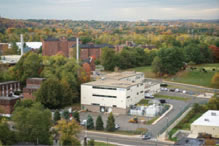
FuelCell Energy was able to generate clean energy and greatly reduce costs for CCSU and Connecticut taxpayers.
As a college committed to environmental sustainability, Central Connecticut State University (CCSU) has adopted bold clean-energy practices that are making other schools take notice. For its nearly 10,000 undergraduate students, CCSU sought a continuous on-site power solution that reduced its carbon footprint and helped it achieve aggressive Climate Action Plan goals. In addition, CCSU was determined to find ways to strengthen its energy security and independence in ways that would not only reduce energy costs, but also provide a level of cost certainty into the future.
A rigorous RFP process revealed an affordable, highly efficient and emission-reducing option: a stationary fuel cell power plant. Fuel cell power generation was an inspiring new concept for the CCSU leadership team, one that ultimately electrified the campus’ electric grid and in turn, the university community.
CCSU chose a fuel cell power plant manufactured by FuelCell Energy, a Danbury, CT-based supplier of megawatt-class fuel cell power plants for on-site and electric grid support applications. The company installed a 1.4 megawatt DFC1500® fuel cell power plant on CCSU’s New Britain campus in only four months.
FuelCell Energy’s highly efficient, stationary fuel cell power plants generate electricity and usable heat energy continuously via an electrochemical process that is virtually absent of the pollutants that cause smog, acid rain, or that can aggravate asthma (particulates). Quiet and easily sited, they have proven to be an ideal solution for universities like CCSU.
“By providing both electricity and steam in such a clean and efficient manner, the fuel cell plant decreases our carbon emissions,” says Dr. Jack Miller, CCSU president. “CCSU’s power costs are annually reduced by an estimated $100,000 — a savings for both the university and Connecticut taxpayers,” he emphasizes.
www.FuelCellEnergy.com
This article originally appeared in the issue of .