New Hand Dryers for a Sustainable Campus
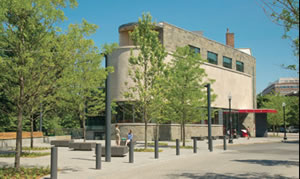
Installing the Dyson Airblade V during the renovation of
a campus building and relocation of the admission center
allowed Boston University to greatly reduce landfill waste
and further their mission of sustainability.
Chartered in 1869, Boston University (BU) is one
of the nation’s largest private
urban research universities. With over
33,000 students, nearly 10,000 staff and 17
schools and colleges offering 250 fields of
study, BU ranks in the top 50 of U.S. News & World Report ’s annual ranking of the
nation’s top universities.
Boston University’s aim is to drive
change on campus and integrate sustainability
into existing education, research
and operations programs to reduce energy
consumption and decrease waste across its
two campuses. With the Facilities Management & Planning department, the initiative
aims to improve the sustainability of existing
campus buildings, renovations and
new construction.
To improve a prospective student’s experience
with a larger, more technologically
advanced space, BU decided to renovate
an existing campus building and relocate
its admission center there. To support their
mission of sustainability at the Leventhal
Center, the university decided to try the
Dyson Airblade V hand dryer in four of the
admission center restrooms.
In the four restrooms with Airblade™
technology, paper towels were not installed
as a hand drying option, therefore reducing
the waste that’s generated from paper
towels. Assuming that an estimated 70,000
annual visitors to the Leventhal Center use
the Dyson Airblade hand dryer instead of
paper towels, over 140,000 paper towels
would be saved from going into a landfill
annually.
www.dysonairblade.com
This article originally appeared in the issue of .