Smart Litter Receptacles Cut Waste Expense
 It’s 2017, and smart, connected phones, watches, thermostats and even refrigerators (to name just
a few examples) no longer occupy the fringe of technology. In fact, our culture’s epic shift toward
“The Internet of Things,” as it’s known, is in full swing. So it should come as little surprise that even
within industries that are traditionally late adopters of new technologies, forward-thinking
companies are making advancements to everyone’s benefit—which is why there’s a smart litter
receptacle coming to a campus near you.
It’s 2017, and smart, connected phones, watches, thermostats and even refrigerators (to name just
a few examples) no longer occupy the fringe of technology. In fact, our culture’s epic shift toward
“The Internet of Things,” as it’s known, is in full swing. So it should come as little surprise that even
within industries that are traditionally late adopters of new technologies, forward-thinking
companies are making advancements to everyone’s benefit—which is why there’s a smart litter
receptacle coming to a campus near you.
Last year, Victor Stanley, a leading international designer and manufacturer of premium outdoor
furnishings, introduced a new generation of connected, intelligent waste receptacles. They’re smart
enough, in fact, to save an estimated 20%–40% on litter and recycling collection expenses each
year. Knowing that a mid-sized university can easily generate 9 million pounds of waste annually, the
company astutely recognized that this level of savings potential would be hard for higher ed facilities
managers to ignore.
Traditional static systems allow for some receptacles to overfill before they are collected—an
aesthetic and olfactory nuisance, for sure—while others that sit empty are collected anyway. Victor
Stanley’s innovative approach allocates collection resources only where and when they are needed.
It turns out these smart receptacles save not only time, but also decrease fuel costs, carbon
footprints and unsightly waste overflows.
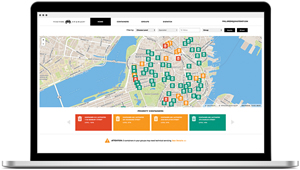
Victor Stanley’s Street Level Sensing™ technology and the RELAY web interface integrate to
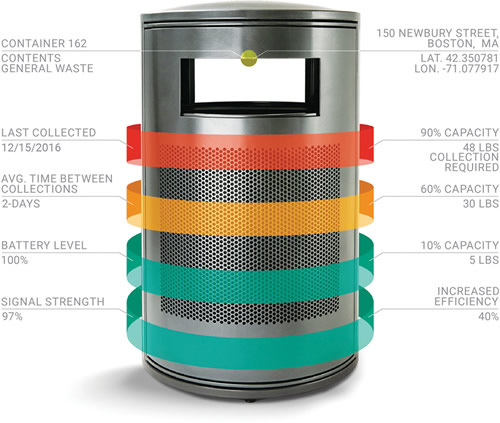
become an intelligent waste management system. Using GPS in conjunction with other sensors, the
company’s new receptacles continuously monitor and transmit fill levels, while also conveying
temperatures, weights, locations and more to cloud-based web portals. And they work with any
type of waste, too (general trash, mixed recyclables, paper, glass, metals, etc.). Monitoring of
containers provides a holistic view of an area’s trash and recycling status, and improves landfill
diversion rates.
Location tracking can be especially useful during large campus events, for example. Imagine a
speech or sporting event that requires the relocation of 14 receptacles in order to manage an
expected increase in waste production. Using GPS, Victor Stanley’s receptacles can be tracked,
located and then returned to their original locations with greater ease and efficiency than has been
previously possible.
What does this all mean from a practical perspective? Put simply, it means that the colleges,
universities and individuals charged with waste control can now employ networks of connected
receptacles and software that enable collection plannings and routings that are substantially more
efficient.
To maintain aesthetics, Victor Stanley’s sensors are hidden within their litter receptacles or recycling
stations. An additional benefit of this is the prevention of unwelcome tampering. Aside from
remaining out of sight through thoughtful design, their sensors are also designed to last, remaining
reliable and accurate even in harsh environmental conditions and high-use environments, such as
heavily trafficked walkways on campuses.
Street Level Sensing™ is available in Victor Stanley’s new receptacles and as a retrofit for
thousands of their side-door receptacles currently in use worldwide. Learn all about this new
technology, and what it can do for your bottom line, at victorstanley.com/product/relay.
Sponsored by: Victor Stanley