Arizona State University Student Union Revamped
The hub of campus activity at Arizona State University’s (ASU) Tempe campus, the student center Memorial Union has been reimagined and revitalized with a 119,000-square-foot new redesign led by architecture firm Studio Ma.
Serving some 30,000 students per day, Memorial Union now offers unique collaborative workspaces for students, a cutting-edge media center for video production training, and new spiritual zones including a meditation room for all faiths with an ablution space for those of the Muslim faith. Outdoors, an area prone to flooding has been reinvented as an absorbent bioswale, or rain garden. The first phase added ballrooms, multi-use event spaces, classrooms and a large auditorium.
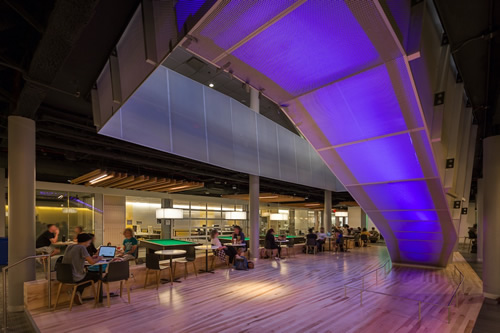
Studio Ma developed a collegiate design aesthetic with sustainable materials from the Southwest region, such as rough-cut sandstone walls, Douglas fir wood ceilings, and mesquite flooring and paneling.
The renovations were shaped by extensive student surveys led by Studio Ma, which identified the need for more collaborative workspaces, new meeting areas and recreation amenities. In response, Studio Ma designed new seating niches and added more soft, lounge-type seating along the facility’s corridors. In addition to these desired “third spaces” bridging between dorm life and academic centers, the research showed students wanted “new quiet areas to gather and engage in spiritual and meditative practices,” says Christiana Moss, AIA, principal and design leader.
The new Memorial Union’s Student Media Center is the first campus place where students can take advantage of video production training and high-tech conference rooms with Skype-enabled screens and cameras.
The innovative new facilities are the second phase of extensive fast-track renovations conceived by Arizona State leadership including university architect Ed Soltero and executed by Studio Ma and construction firm CORE Construction. Tracking LEED Gold, the successful project reflects Studio Ma’s close partnership with ASU’s Educational Outreach and Student Services, as well as Memorial Union’s Executive Director, Michele Grab.