James D. MacConnell Award Winners
- By Barbara C. Worth
- 01/01/18
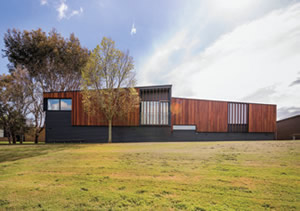 The Learning Project, Caulfield Grammar School Melbourne, Victoria, Australia designed by Hayball, is the recipient of the 2017 James D. MacConnell Award, presented at the recent Association for Learning Environments LearningSCAPES conference in Atlanta. This prestigious award recognizes projects that excel through a comprehensive planning process and execute the vision into educational facilities that enhance the educational program and hold purpose and distinction within a community.
Rob Pillar, director of Educational Architecture at Crabtree, Rohrbaugh & Associates and jury chair commented, “All of this year’s entries were exceptional, making it an extremely difficult task for the jury. The Learning Project stood out because it provides an affordable and scaleable approach to deliver 21st-century educational environments to a wide cross section of a community. It is a series of small projects that will have a big impact on a community of learners.”
The Learning Project evolved through the masterplanning of the three metropolitan campuses at Caulfeld Grammar School. It consists of a series of similar installations deployed across three campuses to test a wide variety of spatial arrangements, designed to catalyze innovation in teaching and learning practice. This project is unique in its scale, scope and reach—it does more than deliver a beautiful learning environment, it seeks to get at the very heart of good design for learning from both an instructional and architectural perspective.
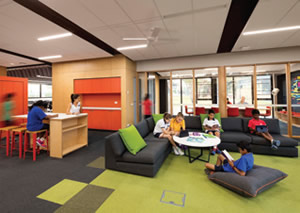 An authentic prototype, the Learning Project is a vehicle for change, enabling the school and design team to evolve spaces and settings to support a multi-modal, learner centered pedagogy. By conducting research and post occupancy evaluations to critically assess and analyse the successes and failures of all aspects of the project, both the school and design team are able to develop an in depth understanding of the links between pedagogy and space. By engaging with formal research to evaluate its impact and creatively utilizing pre-built portable construction, the Caulfeld Grammar Learning Project makes a signifcant contribution to the development of theoretically informed, practice oriented, architectural design for learning.
As Reverend Andrew Syme, principal of the Caulfield Grammar School, remarked, “This project gives a very visible expression of what contemporary learning looks like.” A clear objective of The Learning Project was to challenge the nature of existing learning spaces at Caulfeld Grammar School and thus enable the next step in the evolution of teaching and learning practice across the school’s three metropolitan campuses.
“This is providing a process for us to experiment, to try new things, possibly to fail, hopefully to succeed, and to inform the future” said Richard Leonard, director with Hayball Architects. The Learning Project is adaptable in supporting future changes in educational delivery systems by being an evolving prototype, actively defning the future of teaching and learning spaces. It provides a platform for staff and students to test and evaluate changes in curriculum, pedagogy, and space, which can then be implemented across the wider school community.
Two other exceptional schools were selected as MacConnell Award finalists:
- At Hazel Wolf: E-STEM K-8 School in Seattle, Wash., all learning is focused through an environmental lens. The site and building “spacescapes” support interdisciplinary and project based learning. Planned and designed by NAC Architecture, the school is a harbinger for change through environmental education.
- At the Carter G. Woodson: Education complex in Buckingham County Public Schools, Dillwyn, Va., the design team, led by VMDO, optimized environmental health research factors such as air quality, acoustics, climate, crowding, ergonomics, and lighting to create an educational environment that enhances occupant wellbeing. The entire K-5 school campus is a teaching tool designed to prompt healthy decisions. It encourages healthy eating behavior, promotes activity, and inspires creative exploration of students’ interior and exterior worlds.
“It has been a great honor to serve on this jury. We have seen a steady increase in the quality of planning and design disiplines exhibited in all of the award submissions through the years. This is evidence that A4LE and our members are making a big impact to improve the spaces where our students learn” Pillar said.
Registration to submit projects for the 2018 A4LE MacConnell and LE solutions awards begins in January.
This article originally appeared in the School Planning & Management January 2018 issue of Spaces4Learning.
About the Author
Barbara C. Worth is the director of strategic and private development at the Association for Learning Environments (A4LE), formerly the Council of Educational Facility Planners (CEFPI). A4LE is the only professional organization whose primary purpose is improving the places where children learn. With approximately 4,400 members, A4LE encompasses six geographic regions across the United States, and supports regional representation in Canada, Australasia, and the UK. To learn more, visit www.a4le.org or follow us on Twitter @A4LE2.