Three outdated pest proofing techniques you want to avoid... and what to do instead.
 An effective Integrated Pest Management (IPM) Program begins with making schools less vulnerable to pest infestations by focusing on practices that PREVENT pest problems from occurring in the first place. And one of the key elements in all IPM programs is to block access points pests may use to enter buildings (also called ‘exclusion’).
But here’s the thing… Not all common exclusion practices are proven to work! In fact, there are some common practices still in use that will do little more than waste time and money. When it comes to pest exclusion, the key word is PROVEN. Pest proofing won’t work if ineffective products or techniques are employed. Here are a few examples to consider:
- Spray Foam Is Ineffective: Spray foam is useful as an insulator to improve building climate efficiency, but is useless, by itself, against rodents. Driven by curiosity, a search for warmth, and the need for food and water, rodents will easily chew right through the foam (often in a single evening!). Unfortunately using spray foam as rodent control is still very common among some facility managers.
- Steel Wool Breaks Down: Another less than desirable exclusion practice is wedging standard steel wool between cracks or in holes to create a barrier against rodents. This technique will work for a period of time, but steel wool will eventually rust and break down. That not only leaves it useless as a permanent rodent barrier but also may damage pipes and walls.
- Not All Door Sweeps Are Rodent Proof: Gaps under doors are a key entry point for rodents, so choosing the right door sweep to keep rats and mice out is critical. Plastic, rubber and brush strips used for weatherization are simply NOT an effective barrier against rodents, who can easily eat right though a common sweep. Plus, the ongoing replacement cost of regular door sweeps will quickly outweigh any lower upfront price.
Instead of spray foam or standard steel wool, insist on using specialized material that is proven to be rodent-proof, such as Xcluder® Fill Fabric. Seal all gaps, cracks, and holes larger than ¼ inch with Xcluder, and be sure to pay special attention to areas where pipes and other utilities penetrate walls, floors and ceilings. Remember, mice can squeeze through a hole or gap the width of a pencil!
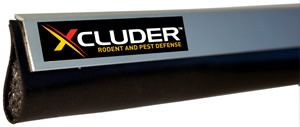 And remember that your average door sweep will do very little to deter mice or rats, so be sure to keep rodents from walking in ‘through the door’ by installing a sweep that is specially designed to keep rodents at bay. Install Xcluder Commercial Door Sweeps on all exterior doors as well as critical strategic interior doors. The reinforced rubber outer layer provides a durable weather seal while the double density inner layer of Xcluder fill fabric creates a barrier that is GUARANTEED to stop mice & rats for the life of the door sweep.
Pest control in schools is essential to protecting the health and safety of students and staff, and pest management experts agree that prevention is vital toward this goal. So be sure you only utilize prevention tools and techniques that have been PROVEN to work.
Sponsored by: Xcluder® Rodent & Pest Defense