New College of Business and Public Management Building for Kean University

Construction is set to begin for the newest academic building on the Kean University campus in Union, NJ. The new facility will better prepare students to become business and public management professionals by simulating the modern business environment.
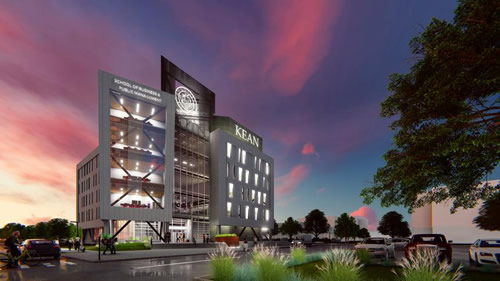
Kean University

The state-of-the-art structure will bring together all of the college’s undergraduate and graduate programs in 90,000 square feet that includes an auditorium; a “Bloomberg room” where students will work on the Bloomberg business intelligence software; classrooms; study lounges; a virtual “library in the sky;” and a rooftop deck with a view of New York City.

Work is set to begin shortly with an anticipated opening in 2020.

Featured

  • Spaces4Learning Trends & Predictions for Educational Facilities in 2026: Part I

    We asked, you answered, and the results are in! Last year, we put out a call for submissions to collect our readership’s opinion on trends and predictions for K–12 and higher education facilities in 2026.

  • Houston K–12 District Opens New Elementary School

    The Lamar Consolidated Independent School District (Lamar CISD) recently announced the completion of a new elementary school in a western suburb of Houston, Texas, according to a news release. Haygood Elementary School measures in at 110,000 square feet, has the capacity for 854 students, and is the first of three new schools scheduled to be built in the Cross Creek West community.

  • University of Arizona Approves New Residence Hall

    The Arizona Board of Regents recently approved plans for a new residence hall at the University of Arizona in Tucson, Ariz., according to a news release. The new facility is scheduled to open in fall 2028 and have the capacity for more than 1,200 students, enforcing a new university expectation that all first-year students live on campus.

  • Pitzer College

    Designing for Change in Higher Ed Learning Environments

    Higher education will continue to evolve, and learning environments must evolve with it. By prioritizing adaptable infrastructure, thoughtful reuse, strong energy performance, and wellness-centered design, campuses can create spaces that support learning today while remaining flexible for the future.