Deep Breaths
- By Michael Fickes
- 01/01/19

PHOTO © WAVEBREAKMEDIA
Have you ever found yourself and your students in the midst of a coughing and sneezing fit? Have you ever felt yourself growing uncontrollably sleepy—after a good night’s sleep? It’s happened to all of us. While there may be several explanations for such problems, one of the most likely is poor indoor air quality (IAQ).
According to the Environmental Protection Agency (EPA) website (epa.gov/indoor-air-quality-iaq): “Indoor air can be two to five times more polluted than outdoor air, and large populations of children might be more susceptible to indoor pollutants than the general population.”
Adequate ventilation can prevent indoor air problems. What is adequate ventilation? Check the “Standards and Guidelines” page at www.ashrae.org. ASHRAE or the American Society of Heating, Refrigerating and Air-Conditioning Engineers is a global professional association seeking to advance heating, ventilation, air conditioning and refrigeration systems design and construction.
According to the ASHRAE website, “The high occupant densities of schools and classrooms make it particularly important for building designers to incorporate ventilation systems that provide adequate outdoor air (in compliance with the industry’s ventilation standard—ASHRAE 62.1-2010), while also controlling moisture and energy costs.
Of course, poor indoor air quality can have detrimental effects on the health of occupants. In a K-12 school (and other enclosed indoor spaces), says the EPA, poor air quality can cause coughing, irritated eyes, headaches, and even respiratory distress related to asthma and allergies.
Such problems create serious roadblocks to learning for students in school. In addition, teachers and instructors will suffer and become less effective.
What Causes Poor IAQ?
While there are a number of causes for poor IAQ, poorly functioning ventilation and air filtration equipment are primary contributors.
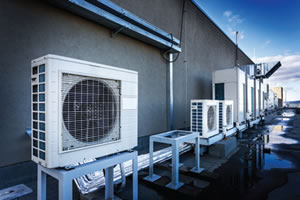
PHOTO © ZDENEK VENCLIK
The Occupational Safety and Health Administration (OSHA) website (www.osha.gov) says inadequate IAQ stems from poor conditions related to temperature, humidity, mold from water damage, chemical exposure, and lack of sufficient outside air or poor ventilation.
Indoor remodeling and construction—especially combined with painting—can also adversely affect indoor air.
Consider the case of Fairgrounds Junior High School in Nashua, N.H. In 1996, Nashua’s health department—as well as the school’s faculty—cited several IAQ deficiencies in the school and required the district to remedy those problems.
The maintenance staff addressed those deficiencies by adjusting the school’s energy management system. That, however, did not solve the problem.
In fact, the problem grew worse. Over the next several months, administrators, teachers, and students began to complain more and more vociferously about general discomfort, inadequate temperature control, and odors. Some began to suffer from dizziness and tingling feelings in their extremities.
In their search for a solution, Fairgrounds’ school officials came across the EPA’s IAQ Tools for Schools program and Action Kit, which helped resolve the problem.
The EPA’s Action Kit includes a list of best practices and industry guidelines to maintain IAQ, sample IAQ policies, and a sample IAQ management plan. The Kit shows school officials and maintenance teams how to implement a plan to improve indoor air problems at little or no cost, using the school’s in-house staff.
12 Steps to Maintaining Good IAQ
In the commercial world, OSHA requires employers to provide a workplace “free from recognized hazards that may cause harm to employees.” That language covers IAQ, which if poor may cause employees to become ill.
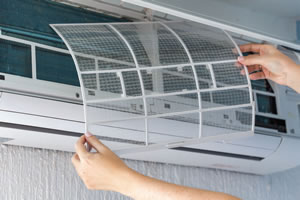
PHOTO © PHOTOPIXEL
In addition, many states have set policies promoting healthy school environments. These policies usually include requirements related to IAQ.
So how can a school comply with these policies and maintain healthy indoor air quality? The EPA recommends the following 12 steps:
- Start with an inspection of the school’s HVAC system.
- Check out the building’s ventilation system. Is it functioning properly? Poor ventilation can set the stage for poor IAQ.
- Inspect the maintenance facilities. Repair leaks and clean up spills—right away. Secure chemical products and other supplies.
- Set a regular schedule for inspecting and changing HVAC filters throughout the facility.
- Clean condensate pans and make sure they are draining properly.
- Establish a regular cleaning schedule for air supply diffusers, return registers, and outside air intakes.
- Isolate outdoor air intakes—at ground level and on the roof—from possible sources of pollutants, such as dumpsters, idling buses, plumbing vents, and kitchen exhaust fans.
- Clean the ducts and the insides of air-handling units or unit ventilators.
- Keep papers, trash, and other items away from unit ventilators.
- Set the HVAC system to turn on and off in step with the building use schedule, including days, evenings, nights, and weekends.
- Educate teachers and staff about the importance of keeping the HVAC system running to ensure proper classroom ventilation.
- Make regular use of the EPA’s IAQ Tools for Schools resources to identify, correct, and prevent IAQ problems.
Indoor air quality is a serious issue for schools today. Failing to attend adequately to IAQ issues can adversely affect the quality of teaching and learning. And that, of course, can adversely affect students’ futures.
In recent years, however, maintenance professionals have gained an ever better understanding of how to manage and improve IAQ, enabling teachers to teach more effectively and students to learn more comprehensively.
This article originally appeared in the School Planning & Management January/February 2019 issue of Spaces4Learning.