District Solar Deal Includes Learning Wagons

An Indiana district is setting up solar farms that will cover the energy usage for three of its schools. Hamilton Southeastern Schools will be working with Ameresco to implement two solar arrays, with a total of 4,800 panels and the capacity of generating 2.4 million kWh annually. The company said that level of energy production was sufficient to power 294 homes for a year, avoiding 1,687 metric tons of carbon dioxide emissions.
District Solar Deal Includes Learning Wagons

District Solar Deal Includes Learning Wagons

District Solar Deal Includes Learning Wagons


Source: Hamilton Southeastern Schools

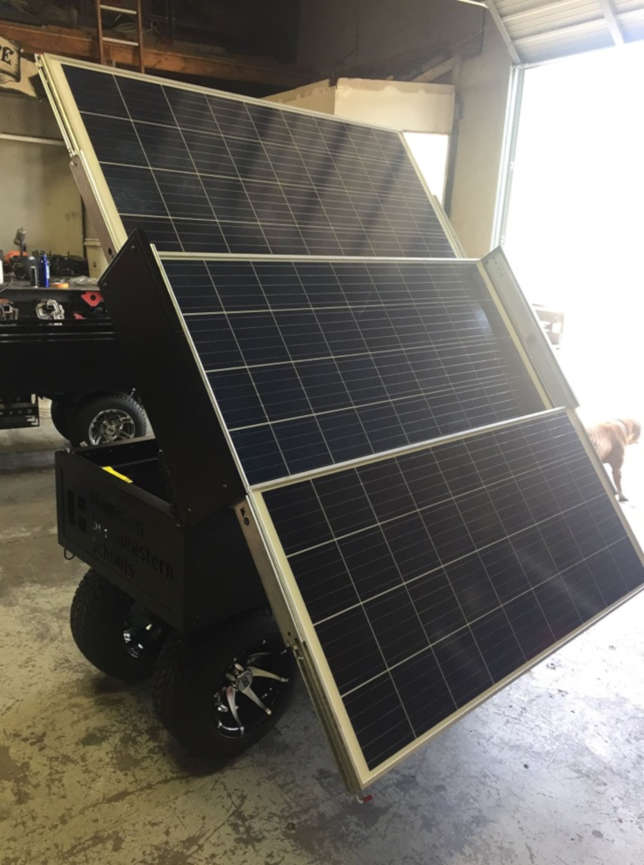
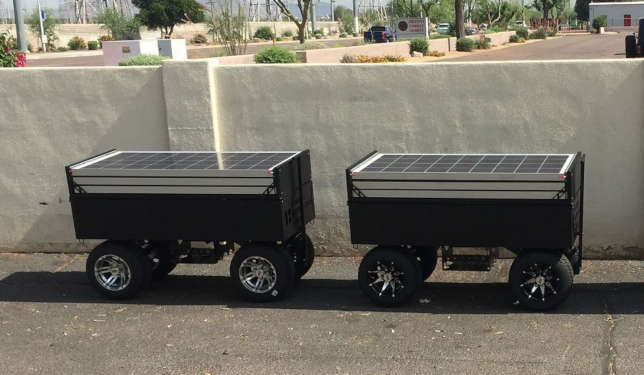
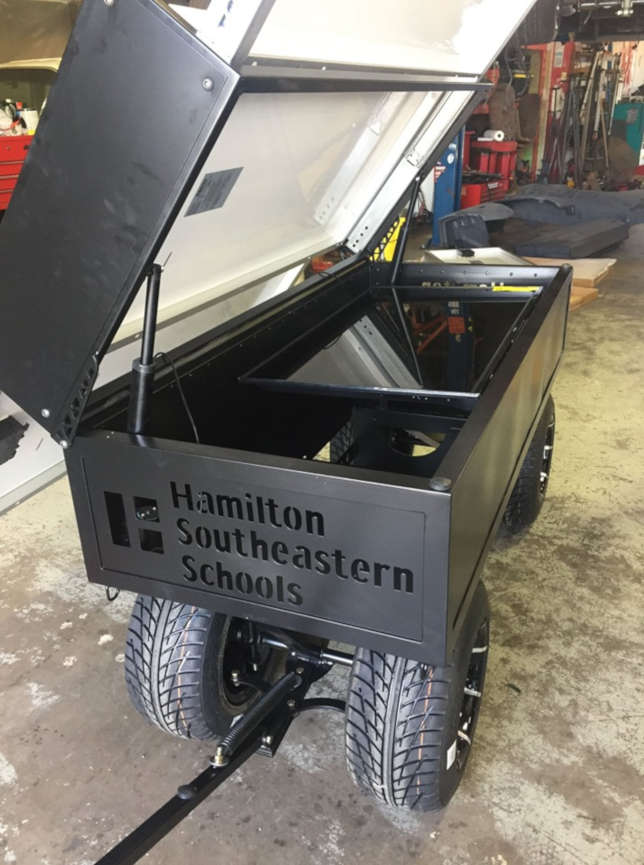
The deal also includes two "solar wagons" and programming to help the schools add solar-oriented curriculum into the classroom.

Funding is coming from a combination of four-year bond fees and cost savings expected from the solar arrays. According to local reporting, the investment is expected to be covered in 11 years through cost savings.

"Our partnership with Ameresco has already allowed us to invest in projects that directly benefit our students and create a more sustainable learning environment at our schools," said Superintendent, Allen Bourff, in a statement. According to the district the project, which began in January, has already loosened up sufficient budget to cover construction of a playground at an intermediate school, with the expectation that two more will be built in the future.

About the Author

Dian Schaffhauser is a former senior contributing editor for 1105 Media's education publications THE Journal, Campus Technology and Spaces4Learning.

Featured

  • TCU Marks Campus Expansion Milestone

    Texas Christian University in Fort Worth, Texas, recently held a topping-out ceremony to mark progress on a major campus expansion effort including four new residential facilities and a five-story parking garage, according to a news release.

  • Designing the Bridge Between Inclusivity and Independence in K–12 Schools

    Fostering independence is fundamental to learning and development for K–12 students. It offers many proven benefits, such as enhanced confidence, problem-solving, decision-making, and social skills. However, this foundational objective loses its impact if it’s not accessible and adaptable to all students. Inclusivity plays a critical role in cultivating independence and healthy autonomy for students, fostering positive student learning outcomes by uniting pedagogy with the physical learning environment.

  • University of Pennsylvania Releases Design of Future Physical Sciences Building

    The University of Pennsylvania (Penn) in Philadelphia, Penn., recently released renderings of an upcoming 350,000-square-foot Physical Sciences Building, according to news release. The facility was designed by CO Architects and will unite the university’s departments of Physics and Astronomy, Mathematics, and Earth and Environmental Science.

  • Spaces4Learning Launches 2026 Facilities and Construction Brief Survey

    Spaces4Learning recently launched the 2026 Facilities and Construction Brief Survey, which collects data on the previous year’s K–12 and higher education construction projects nationwide.