University of North Dakota Breaks Ground on Fraternity House

GRAND FORKS, ND – In 1922, the Alpha Tau Omega (ATO) house was built on the Grand Forks, ND, campus of the University of North Dakota (UND), helping establish a Greek tradition at UND that has stood the test of time. The facility was damaged in the the 1997, however, resulting in the demolition of the house in 2007.
University of North Dakota

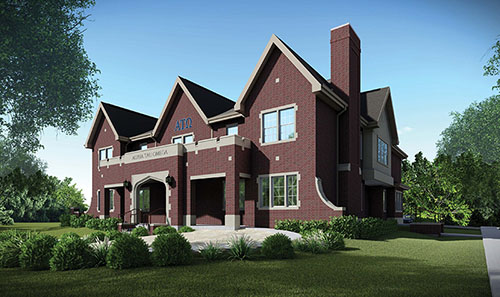
In late July, leaders of ATO and UND broke ground on a spectacular new building, aiming to ensure the chapter’s physical presence for another 100 years. The new version of ATO will be the first fraternity house built on campus since Pi Kappa Alpha’s rebuild in 2004.

Funding for completing the project debt-free is being raised by alumni in a three-year fund drive, with more than 85 percent of the construction goal already pledged.

Scheduled for completion by August 2020, the new ATO house will feature accents aligning it with the Collegiate Gothic architecture of UND while providing top-of-the-line facilities to residents of the Delta Nu Chapter.

Featured

  • Abstract tech network data connections with orange, blue glowing dots, lines

    3 Trends for Higher Education to Stay Ahead of in 2026

    As universities enter the new year, the question is no longer whether digital transformation is necessary, but how quickly institutions can convert technological potential into strategic advantage.

  • Photo credit: Elkus Manfredi Architects

    University of Virginia Selects Design-Build Team for New Residential Complex

    The University of Virginia in Charlottesville, Va., recently announced that it has selected a design-build team for a new upper-class residential development on campus, according to a news release. Capstone Development Partners—in partnership with Elkus Manfredi Architects and the Hoar Construction/Hourigan construction team—will move forward with the three-building, 310,000-square-foot housing facility.

  • Pitzer College

    Designing for Change in Higher Ed Learning Environments

    Higher education will continue to evolve, and learning environments must evolve with it. By prioritizing adaptable infrastructure, thoughtful reuse, strong energy performance, and wellness-centered design, campuses can create spaces that support learning today while remaining flexible for the future.

  • Different Starting Points, Same End Goal

    Higher education campuses can enhance student experience by implementing mobile credentials to streamline building access, on-campus payments, and access to other amenities. This enables students to connect to their campuses through the technology they use most: their mobile devices.