Winter Meets Its Match
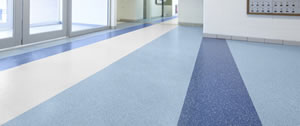
Syracuse’s harsh winter weather has met its match at
Syracuse University with the installation of rubber flooring
rubber flooring in residential entrance areas, corridors,
common spaces, and stairwells.
Syracuse University in
New York has its hands full educating
21,000 students each year. With 70 percent of those students living on
campus in 22 residence halls, the university’s
housing team has a lot to contend with,
including comfort, safety, and upkeep.
Two big challenges? The brutal Syracuse
winters and the constant, high-volume
traffic within dorm buildings. The housing
team needed a floor that could stand up to
both. They selected nora® by Interface® rubber
flooring to cover dorm entrance areas,
corridors, common spaces, and stairwells.
Over the past seven years, the floor has
outperformed expectations. “The versatility
of rubber lends itself to many different
spaces,” says Robert J. Spagnoletti, manager
of maintenance, “and it performs in all of
them, functionally and aesthetically.”
The floor’s easy maintenance regimen
played a key role in the selection of rubber—no wax or coating necessary. “That was a
main driving factor,” says Spagnoletti. “We
found a good product that we don’t have to
wax and strip.” Since installation, the floor
has delivered on performance—the Syracuse
maintenance team’s toughest obstacle.
“Our biggest challenge is the winters
and dealing with the snow and salt, keeping
the salt down outside, but minimizing
the trailing effect inside,” Spagnoletti
shares. The nora rubber flooring has performed
so efficiently that the maintenance
team is using spare tiles as walk-off pads
for elevators during the winter.
“We’re getting strong support from all
of our directors. They see the areas where
nora has been installed and are happy with
how it’s worked,” Spagnoletti says.
www.interface.com
This article originally appeared in the College Planning & Management September 2019 issue of Spaces4Learning.