State-of-the-Art Health Sciences Building Underway at Assumption College

WORCESTER, MA – Construction has begun on a new 41,000-square-foot Health Sciences Building at Assumption College. A groundbreaking was held on May 10 and construction will be completed for the fall 2020 semester. The facility was designed by Nault Architects, Lauring Construction is serving as general contractor on the project.
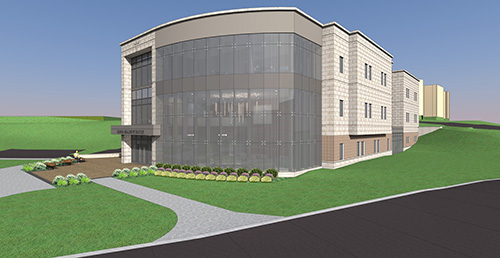
Assumption College Health Sciences Building

The Health Sciences building will house the nursing and physician assistant studies programs set to open in fall 2020, but will benefit students in all disciplines. The nursing floor will feature a large nursing skills lab with seven full-sized hospital beds for teaching patient care. Four simulation labs will have hi-fidelity manikins which can simulate actual patient conditions (vitals, seizures, cardiac arrest, childbirth, etc.) ,all of which can be controlled remotely by a simulation lab technician.

Throughout the spacious building with an interior illuminated by natural light, students will have access to lounges, smaller break-out space and de-briefing rooms and conference rooms, nine offices for faculty and staff, and suites for each of the deans.

Featured

  • Sam Houston State University Completes Athletic Stadium Renovations

    Sam Houston State University in Huntsville, Texas, recently announced the reopening of Elliott T. Bowers Stadium after an extensive renovation project, according to a news release. The university partnered with Stantec and DLR Group for the project’s design.

  • California High School Opens New Classroom Building for 7th-, 8th-Graders

    Santa Rosa City Schools in Santa Rosa, Calif., recently announced the completion of a new classroom building for Piner High School. As the campus transitions to a Junior/Senior High School, the facility will play home to the school’s new population of seventh- and eighth-grade students.

  • Growing Allied Health Workforce Demands Fueling Greater Need for Higher Education Facilities

    With the demand for healthcare professionals at an all-time high, colleges and universities are challenged with supporting the workforce demands in their own communities. Careers in allied health generally require specific training and/or certification, with some positions requiring degrees, certified credentials, and continuing education.