Suffolk University Buys a Landmark
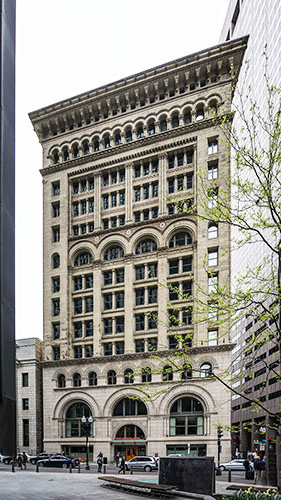
Ames Building Suffolk University

Kenneth C. Zirkel

BOSTON, MA – Suffolk University President Marisa Kelly recently announced that the university has completed the purchase of the Ames building at 1 Court St. in Boston. The university plans to seek permitting for a new residence hall in the heart of Suffolk’s core downtown Boston campus, with a projected opening of fall 2020.

“This is a great opportunity for Suffolk and an important investment in our future,” says Kelly, who cited a strategic initiative to expand residence hall capacity on campus.

The next step toward this goal is undergoing the rigorous city review process necessary to permit the building for use as a residence hall, a process that will involve significant input from the Boston community. John Nucci, senior vice president for External Affairs for Suffolk University, and his team are leading this process.

“The opportunities that our students gain while living, studying, and working within our downtown Boston campus are exceptional,” says Kelly. “Expanding campus housing in this location will further facilitate this commitment both for the students who will live in the building and by offering additional opportunities to launch new or expanded partnerships with our neighbors.”

The Ames Building at 1 Court St., built in 1893, was the first skyscraper in Boston and the city's tallest building until 1915. It is steps from City Hall, the financial district, and the Old State House and within several blocks of key university buildings. It will become another centerpiece of Suffolk’s campus, helping to further solidify the university’s borderless community within the center of Boston.

Featured

  • Designing the Bridge Between Inclusivity and Independence in K–12 Schools

    Fostering independence is fundamental to learning and development for K–12 students. It offers many proven benefits, such as enhanced confidence, problem-solving, decision-making, and social skills. However, this foundational objective loses its impact if it’s not accessible and adaptable to all students. Inclusivity plays a critical role in cultivating independence and healthy autonomy for students, fostering positive student learning outcomes by uniting pedagogy with the physical learning environment.

  • Rethinking K-12 Schools as a Continuous Learning Experience

    Most students move through three or more separate facilities during their K-12 journey, yet the built environments they encounter at each stage have traditionally been designed in isolation, with little continuity in spatial language, learning philosophy, or physical resources. Each new school is a reset with different layouts, learning models, expectations, and ways of moving through a building. The next generation of school design is making the case that the first day of kindergarten and the last day of high school can and should feel connected through common support systems and infrastructure in the physical environment.

  • Minnesota District Converts Middle School into Community Hub

    White Bear Lake Area Schools in White Bear Lake, Minn., recently announced the end of a major renovation project that converted a former middle school into a new centralized district and community hub, according to a news release.

  • ed tech conference calendar

    Upcoming Awards, Events & Webinars